


Picture it: mid-flight, a passenger’s power bank starts smoking inside the overhead bin. The cabin fills with haze. The crew scrambles to reach a bag buried under a dozen others. It sounds like a rare nightmare. It isn’t. Versions of this keep happening, and they’re exactly why the power bank rules on planes quietly changed over the past year, leaving a lot of travelers packing by outdated habits.
Here’s the good news, right up front: power banks are still perfectly fine to fly with. They’re on almost every flight, every day, without incident. You just have to stop making one very common mistake, and understand a few new rules that caught a lot of travelers off guard in 2025 and 2026.
Let’s walk through it together.
First: Why the Sudden Crackdown?
The reason is the whole point of every rule below, so it’s worth thirty seconds.
Lithium batteries (the kind inside every power bank, phone, and laptop) can enter something called thermal runaway, which is a chain reaction where the battery overheats, ignites, and burns ferociously in seconds. Once it starts, it can even reignite after the flames look like they’re out.
This isn’t hypothetical. The U.S. Federal Aviation Administration has tracked well over 600 lithium-battery incidents on aircraft since 2006, and 2025 set a record with 97 smoke, fire, or extreme heat events on U.S. flights. Battery packs and power banks are behind nearly 40% of them.
The tipping point came in January 2025, when a fire aboard an Air Busan A321 traced to a power bank stored in an overhead bin destroyed the aircraft on the ground in South Korea and injured passengers during the evacuation. Since then, regulators and airlines worldwide have tightened their rules, and in September 2025 the FAA issued a formal safety alert flagging the exact danger of batteries tucked away where crew can’t see them.
So the new rules aren’t red tape. They’re a direct response to real fires. And once you know the why, the what is easy to remember.
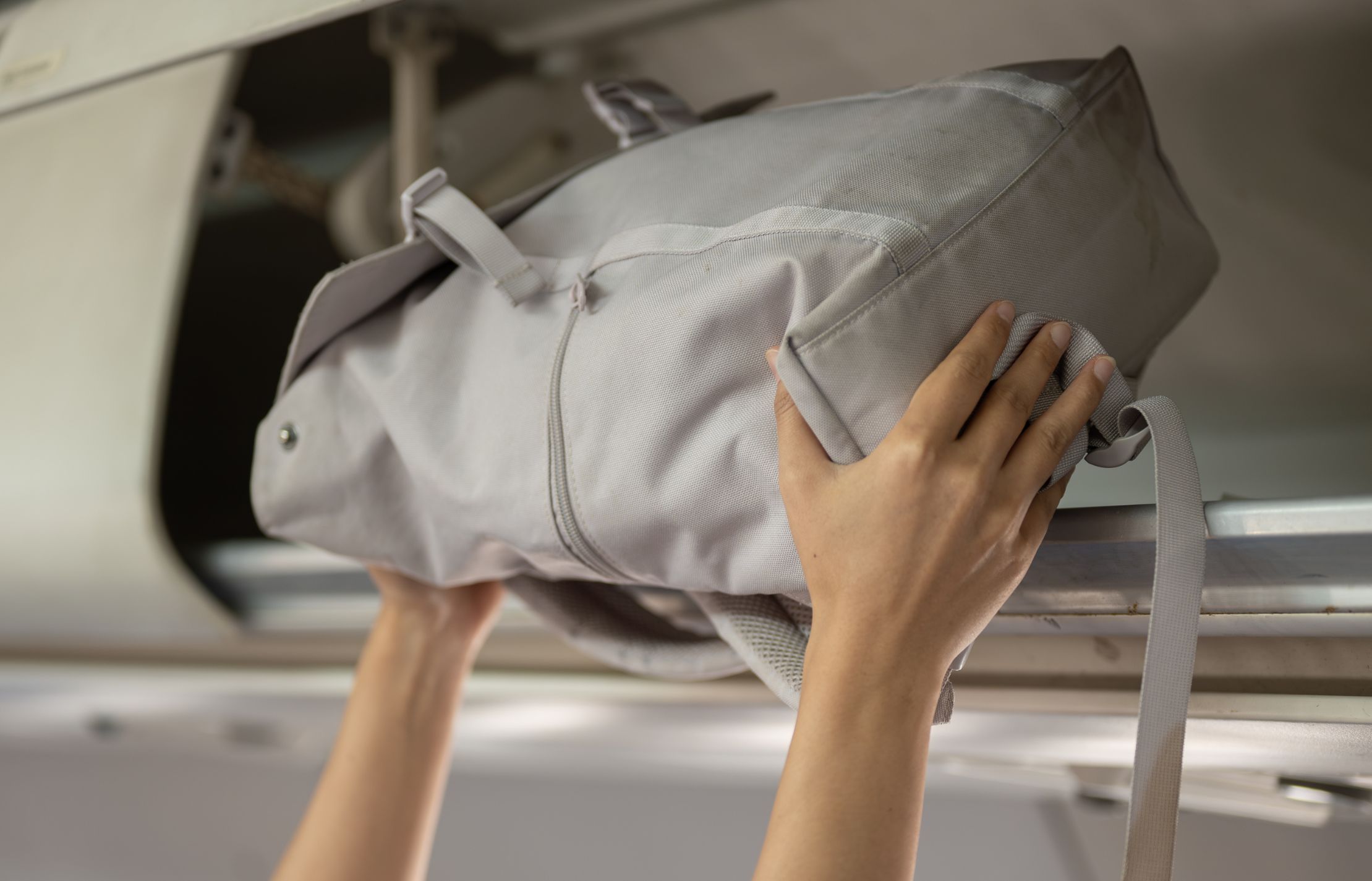
Rule 1: Your Power Bank Must NEVER Go in the Overhead Bin
This is the single most important rule, and the one people break constantly.
Keep your power bank in your seat pocket, in your lap, or in a bag under the seat in front of you. Visible. Within arm’s reach.
The logic is simple and honestly kind of reassuring: if a battery starts to smoke, the crew needs to see it and grab it in seconds. In an overhead bin, a fire grows unseen until it’s serious. In your seat pocket, it’s caught almost instantly. This rule doesn’t just protect you; it protects the whole cabin.
This is also why the FAA’s 2025 alert specifically called out the hazard of batteries stored in overhead bins, and why carriers from Southwest to United now require power banks to stay out of them.
Rule 2: Power Banks Fly in the CABIN Only. Never in Checked Baggage
Same reasoning, higher stakes. A fire in the cargo hold can smolder undetected with no one there to stop it. In the cabin, a trained crew with fire-suppression equipment is only feet away.
This one is not optional and not airline-specific. It’s a hard FAA and international safety rule that’s been in place for years, and it has no exceptions.
The practical trap: if you get asked to gate-check your carry-on on a full flight, pull your power bank (and any spare batteries) out first and keep them with you. Your bag can go under the plane; your batteries cannot.
Rule 3: Know Your Charger’s Watt-Hours (Wh): the Number That Decides Everything
Every power bank has a watt-hour rating, and that number determines whether it’s even allowed on board:
- Under 100Wh → Fine. No approval needed. This covers almost every normal power bank (roughly up to 27,000mAh).
- 100–160Wh → Allowed, but you need your airline’s approval first, usually a maximum of two.
- Over 160Wh → Banned from passenger flights, full stop.
Here’s the catch: chargers advertise the big, impressive “mAh” number on the front, not the “Wh” number that actually matters. Look for the small “Wh” printed on the side or bottom.
No Wh listed? Do the quick math:
(mAh ÷ 1000) × 3.7 = Wh Example: a 20,000mAh bank ≈ 74Wh — comfortably under the limit.
One more tip: a charger that won’t power on at all can get confiscated at the checkpoint, because a dead or damaged battery is exactly the kind that fails. If it’s swollen, dented, or acting strange — leave it home.
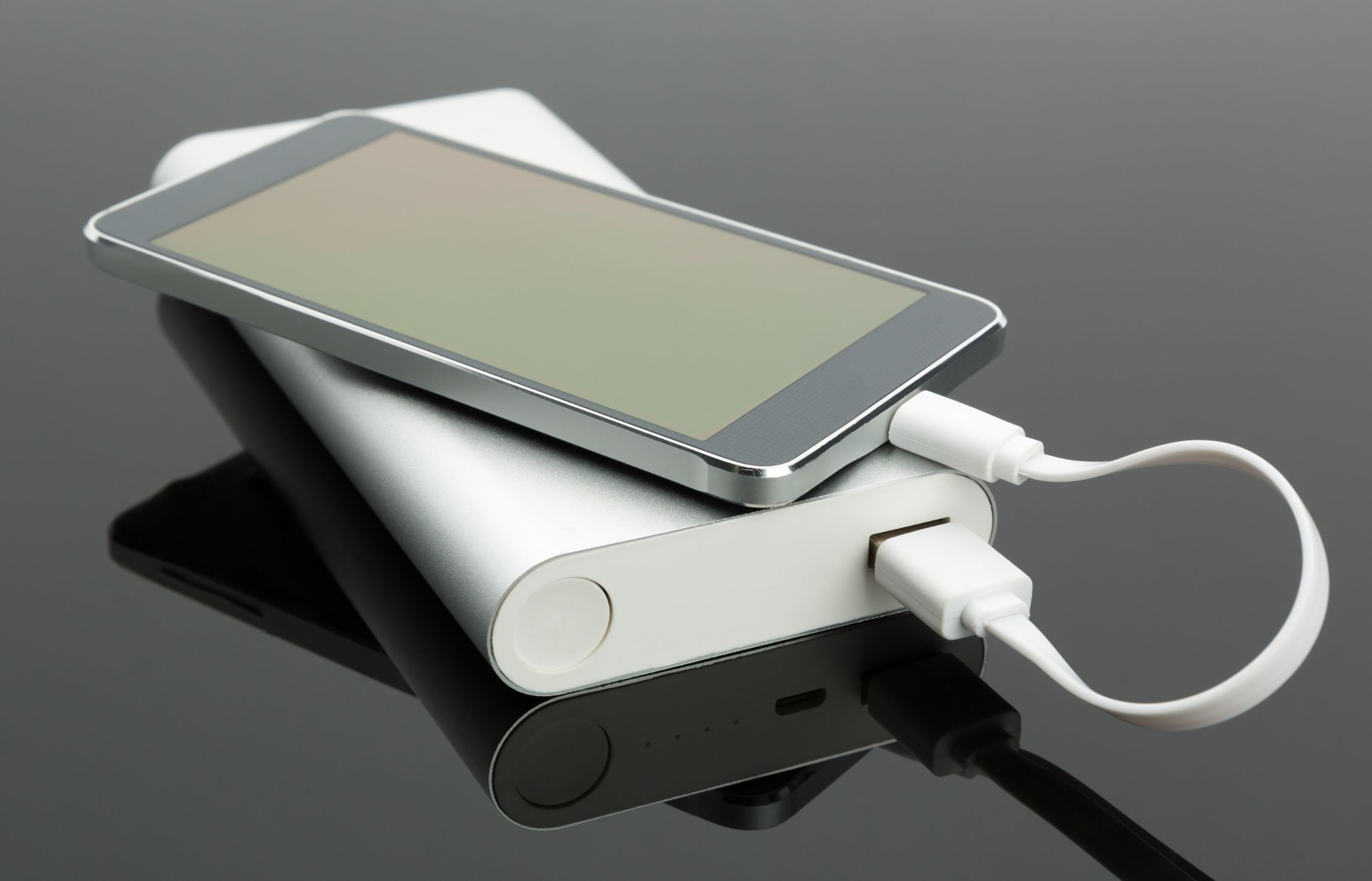
Rule 4: Can you use a power bank on a plane? It depends on the airline
This is the newest rule, and it’s the one that surprises people most, partly because it’s easy to confuse two very different things:
- Using your power bank to charge your phone from your seat → often still fine.
- Recharging the power bank itself by plugging it into the plane’s seat outlet → now banned almost everywhere.
Why the difference? Charging into a battery generates the most heat, which is exactly when a cell is likeliest to fail, and aircraft seat power can fluctuate in ways your bank isn’t built for. In March 2026, this became a near-global standard when ICAO’s guidance (adopted across its 193 member states) set the baseline at two power banks max in your carry-on, kept accessible, and no recharging from the seat outlet.
But whether you can even use your power bank at all during the flight varies a lot by airline. Some (especially in the Middle East, parts of Asia, and the Lufthansa Group) have banned in-flight use entirely. So, you carry it, but you can’t switch it on. Others still let you top up your phone at cruise.
Power Bank Rules on Planes: Airlines Overview
Below is a snapshot of where major carriers stand (policies change fast, so always confirm with your specific airline before you fly):
| Airline | Use it to charge your phone in flight? | Recharge the bank from the seat outlet? | Power banks allowed |
|---|---|---|---|
| Ryanair | ✅ Yes (at cruise) | 🚫 No | Up to 20 spares (≤100Wh each) |
| American Airlines | ✅ Yes (must stay visible) | 🚫 No | 2 |
| Delta | ✅ Yes | 🚫 No | 2 (up to 160Wh) |
| United | ✅ Yes | 🚫 No | 2 (up to 160Wh) |
| Southwest | ✅ Yes (must stay visible) | 🚫 No | 1 |
| British Airways / easyJet / Jet2 | ✅ Yes (at cruise) | 🚫 No | Up to 20 spares |
| Cathay Pacific | ✅ Yes | 🚫 No | Carry-on only |
| Emirates | 🚫 No — use banned entirely | 🚫 No | 1 (<100Wh) |
| Etihad | 🚫 No — use banned entirely | 🚫 No | 1 (<100Wh) |
| Singapore Airlines / Scoot | 🚫 No — use banned entirely | 🚫 No | 2 |
| Lufthansa Group (SWISS, Austrian, Brussels, Eurowings) | 🚫 No — use banned entirely | 🚫 No | 2 |
| Qatar Airways | 🚫 No — use banned entirely | 🚫 No | 2 |
| Wizz Air / Virgin Atlantic | 🚫 No — use banned entirely | 🚫 No | 1–5 spares |
Sources: Emirates, Singapore Airlines / Cathay comparison, Lufthansa Group, Southwest, American, and Ryanair.
The pattern to remember: most U.S. and UK/EU carriers still let you charge your phone from your bank at cruise; many Gulf and Asian carriers, plus Lufthansa Group, don’t. And nearly everyone now says: don’t recharge the bank itself in your seat. Rules are also strictest on flights to and from China and Japan, where domestic in-flight use is banned outright.
Quick Airport Tips So You’re Not That Person at the Checkpoint
- Keep power banks in your carry-on, in an easy-to-reach pocket — not buried at the bottom.
- Make sure the Wh (or at least mAh) rating is printed and readable. No label = a common reason for confiscation.
- A charger that won’t turn on at all may be taken — a dead or damaged battery is a red flag.
- Damaged, swollen, or dented battery? Leave it home. That’s exactly the kind that fails.
- Flying a route with strict rules (China, Japan, many Asian and Gulf carriers)? Double-check that specific airline before you pack.
The Bottom Line on Power Banks
None of this means power banks are banned. They fly safely on nearly every flight, all day, every day. The travelers who get caught out at the gate are usually just packing by last year’s habits.
If you remember one sentence, make it this one:
Keep it under 100Wh, in the cabin, out of the overhead bin, and within reach.
Everything else is a detail you can check per airline.
Power Bank Rules on Planes: Quick FAQ
Can you bring a power bank on a plane?
Yes. Power banks are allowed on planes as long as they travel in your carry-on (never checked baggage) and stay under 100Wh — which covers almost every everyday charger. Larger 100–160Wh banks need airline approval; anything over 160Wh isn’t allowed on passenger flights.
Can you use a power bank on a plane during the flight?
Usually, but it depends on the airline. Most U.S. and UK/EU carriers let you charge your phone from a power bank once you’re at cruising altitude, while several Gulf and Asian carriers and the Lufthansa Group have banned in-flight use entirely. Recharging the power bank itself from a seat outlet is now banned almost everywhere.
What size power bank can you take on a plane?
Anything rated under 100Wh — roughly up to 27,000mAh — is fine with no approval needed. If only the mAh is printed, use (mAh ÷ 1000) × 3.7 = Wh to check. A 20,000mAh bank works out to about 74Wh, comfortably under the limit.
Can power banks go in checked luggage?
No — never. Power banks and spare lithium batteries must stay in the cabin so crew can reach them fast. If your carry-on gets gate-checked, take your power bank out and keep it with you.
How many power banks can you bring on a plane?
The global standard is two per passenger in your carry-on, though some airlines (like Emirates and Southwest) allow just one, and some UK carriers permit more spare batteries. Always confirm your specific airline’s limit before you fly.
Planning a Trip and Not Sure How Your Route’s Rules Stack Up?
This is exactly the kind of thing our ASAP Tickets travel agents love to sort out for you. Beyond finding you great deals on complex, long-haul, and multi-city international trips, they’re real people who are available 24/7 and can help you make sense of the little details that make travel smoother, from baggage quirks to routing.
Call our agents anytime at 1-844-300-7983. They’re here around the clock to help you get where you’re going.
More Travel Rules Worth Bookmarking Before You Travel
Power banks are just one of the “wait, that’s a rule?” moments travelers run into. Here are a few more from our blog worth knowing before your next trip:
- How Much Cash Can You Bring Into or Out of the US? The $10,000 Rule — What you actually need to declare at the border (and what happens if you don’t).
- Your $800 Duty-Free Allowance: How to Shop Smart Abroad — The $200, $800, and $1,600 tiers, and how to stay under your limit.
- What Food Can You Bring Into the US? — Can you bring mangoes, coffee, or candy home from your trip? Here’s what clears customs.
- Beef Jerky, Cheese & Cured Meats — What meat and cheese you can bring back into the US.
Rules and airline policies referenced here were accurate at the time of writing and change frequently. Always confirm current requirements with your airline and the relevant aviation authority before you travel.

Get it right to your inbox by subscribing to ASAP Tickets weekly emails featuring the hottest flight deals from US to the .
Massive savings • Unsubscribe at any time.
You were sucessfully subscribed
Please check your inbox to confirm the subscription