


It starts with a match. In a Cape Town township, a Johannesburg suburb, a Free State farm. And in backyards in London, Toronto, and Sydney. Every September 24, South Africans light the same fire on the same day, and a nation spread across the world gathers, for a few hours, around one flame. This is Heritage Day.
No other South African holiday works quite like this one. Heritage Day carries a weighty history and wears it lightly. It’s a day born from hard political compromise that the country now celebrates over open flames and shared plates. Maybe you grew up with the smell of boerewors on the grill. Maybe one of the world’s most diverse cultures simply pulls at you. Either way, here’s what Heritage Day really means, and how to be there for it.
What Is Heritage Day?
Heritage Day is a South African public holiday celebrated every year on September 24. Its purpose is simple and generous: to encourage all South Africans, across every culture, language, and background, to celebrate what makes them who they are.
That matters in a country often called the “Rainbow Nation.” South Africa has twelve official languages and an enormous range of cultural traditions living side by side. Heritage Day is the moment the country sets aside to honor that diversity — through food, music, traditional dress, storytelling, and time spent together.
In 2026, Heritage Day falls on Thursday, September 24. That timing is key for anyone hoping to travel for it, and we’ll come back to why.
The History Behind the Holiday
Heritage Day didn’t start as a celebration of everyone. It began as something more specific.
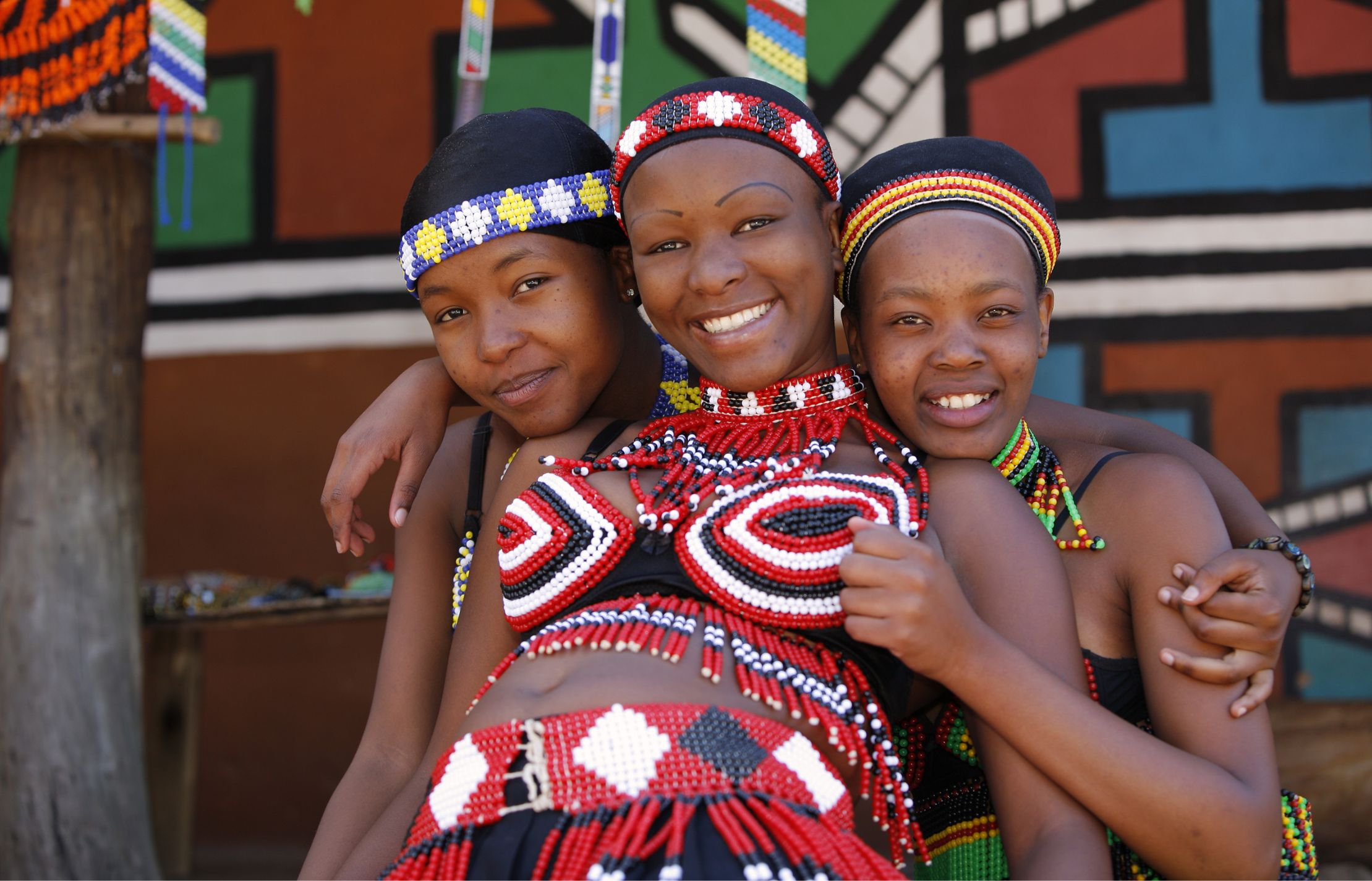
In the province of KwaZulu-Natal, September 24 was long observed as Shaka Day, honoring King Shaka Zulu (the legendary leader who united disparate Zulu clans into a single, powerful nation in the early nineteenth century). Each year, people gathered at his grave to pay tribute.
When South Africa’s new democratic parliament drew up its list of public holidays in 1995, September 24 was left off. The Inkatha Freedom Party, a party with a large Zulu membership, objected strongly. After debate, a compromise was reached: the date would be kept, but reframed. Rather than commemorating one king and one nation, it would become Heritage Day: a holiday for all South Africans to celebrate their diverse cultural roots.
In 1996, President Nelson Mandela captured the spirit of that decision, describing the country’s rich and varied cultural heritage as having a profound power to help build the new nation.
It’s worth being honest that “whose heritage” a single day should celebrate has always carried some tension in a country with South Africa’s past. That complexity is part of the story, not a footnote to it. But the enduring idea behind Heritage Day is unity through diversity. A shared day for distinct traditions.
How Heritage Day Became “Braai Day”
Here’s where the holiday takes a savory turn.
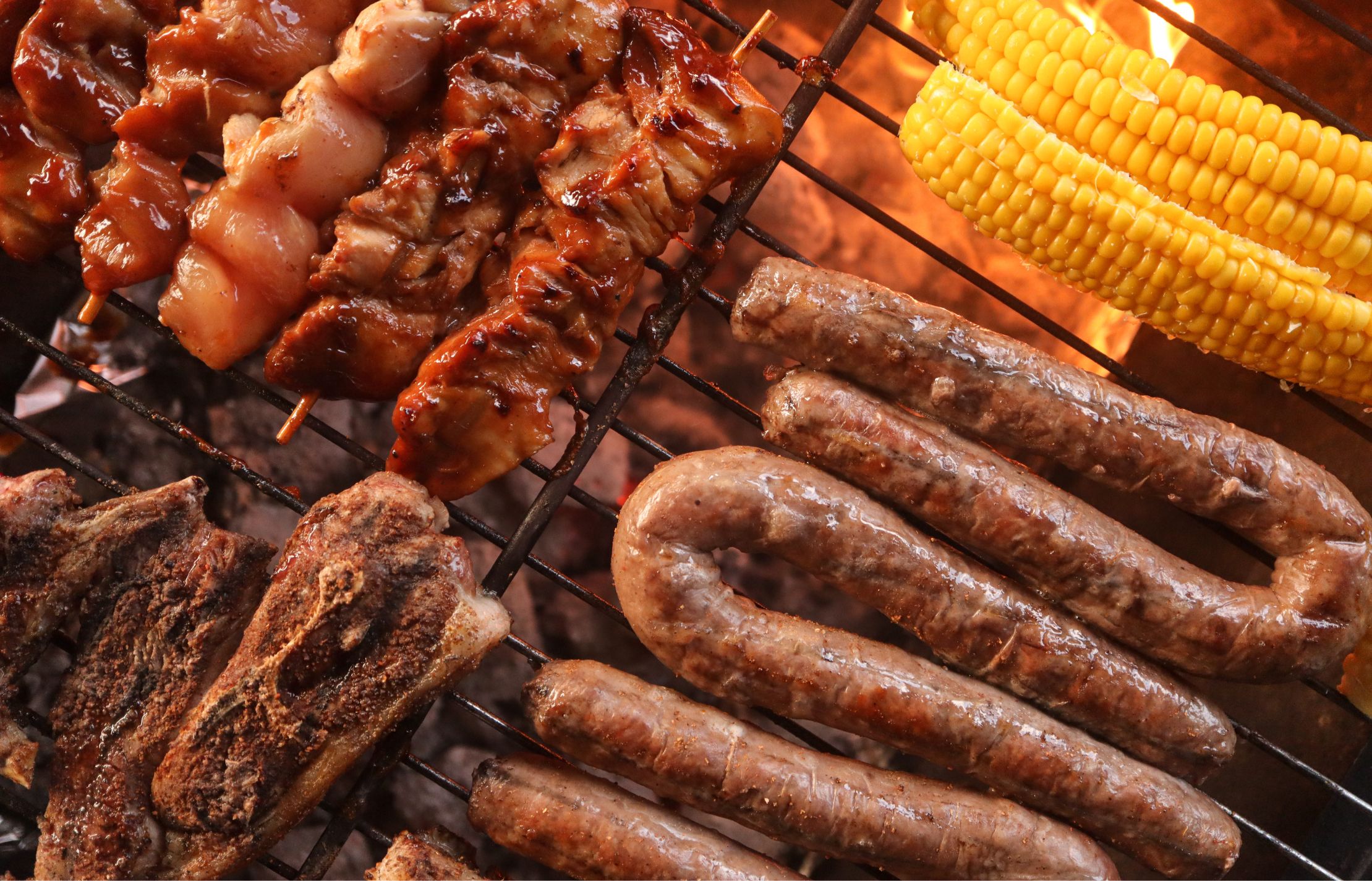
In 2005, a media campaign led by Jan Scannell (better known as “Jan Braai”) set out to rebrand September 24 as National Braai Day. The logic was very simple. The braai, South Africa’s beloved tradition of the open-fire barbecue, is something nearly every South African shares, regardless of language, culture, or background. What better way to unite a diverse nation than around a common fire?
The idea caught on. Archbishop Desmond Tutu became the campaign’s patron in 2007, memorably delighting in the vision of the whole country gathering around one fire on the same day. The National Heritage Council was skeptical at first, then embraced it, and the campaign evolved into “Braai4Heritage.”
Today, Heritage Day and Braai Day are used almost interchangeably. The braai has become the day’s signature ritual — one of the few South African public holidays with a specific, joyful tradition attached to it. As Tutu put it, it’s a fantastic thing, and a very simple idea.
What a Heritage Day Braai Actually Looks Like
If you’ve never experienced one, a Heritage Day braai is less an event than an all-day gathering.
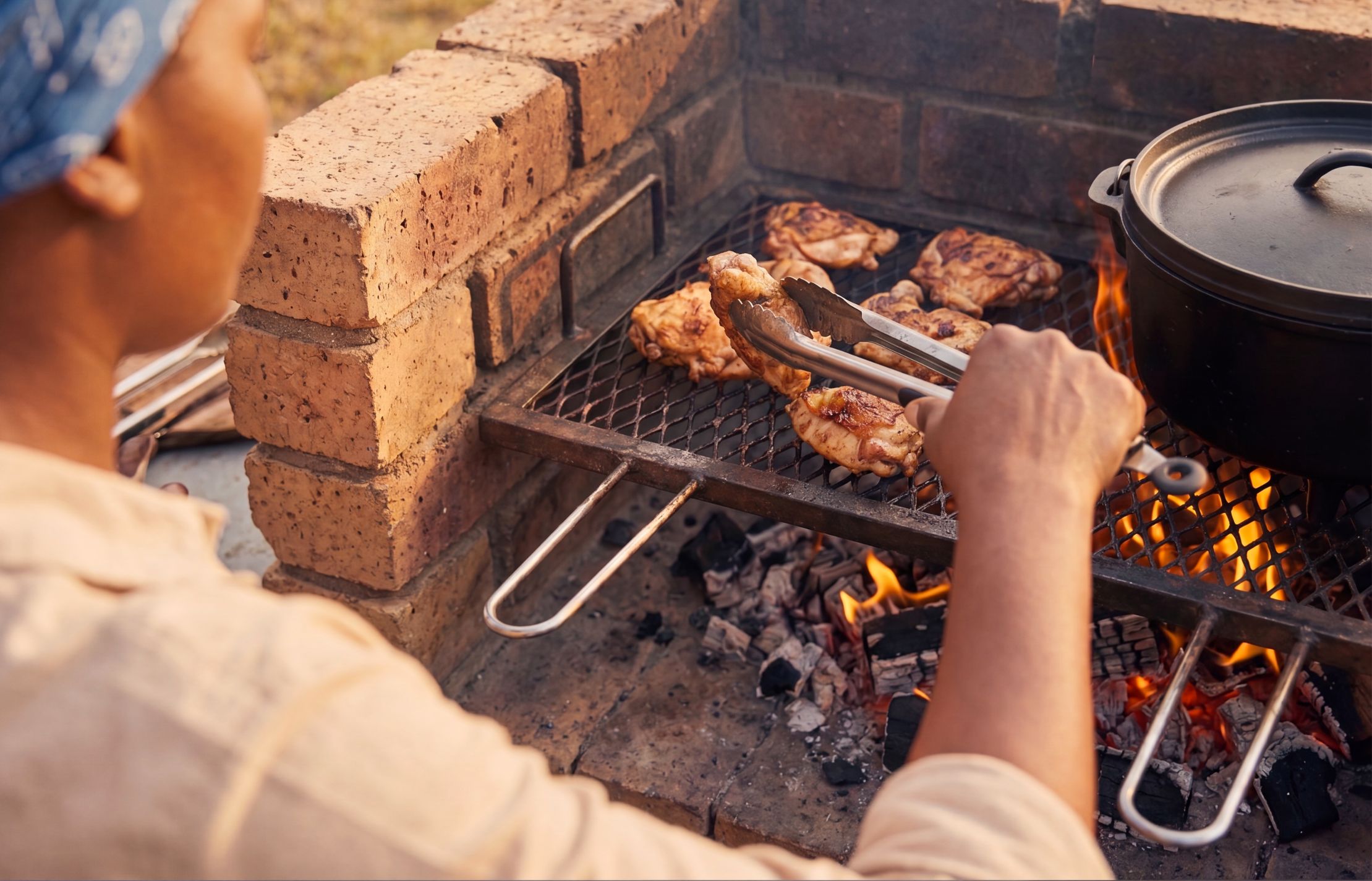
The fire is central. And it must be a real wood or charcoal fire, not a gas grill. That distinction is taken seriously. Someone is appointed the braai master, and tending the fire is a role of genuine honor. Onto the grill goes boerewors (the coiled farmer’s sausage), lamb chops, steak, chicken, and sometimes game meat. On the side: pap (a maize porridge), chakalaka (a spicy vegetable relish), salads, and plenty of bread.
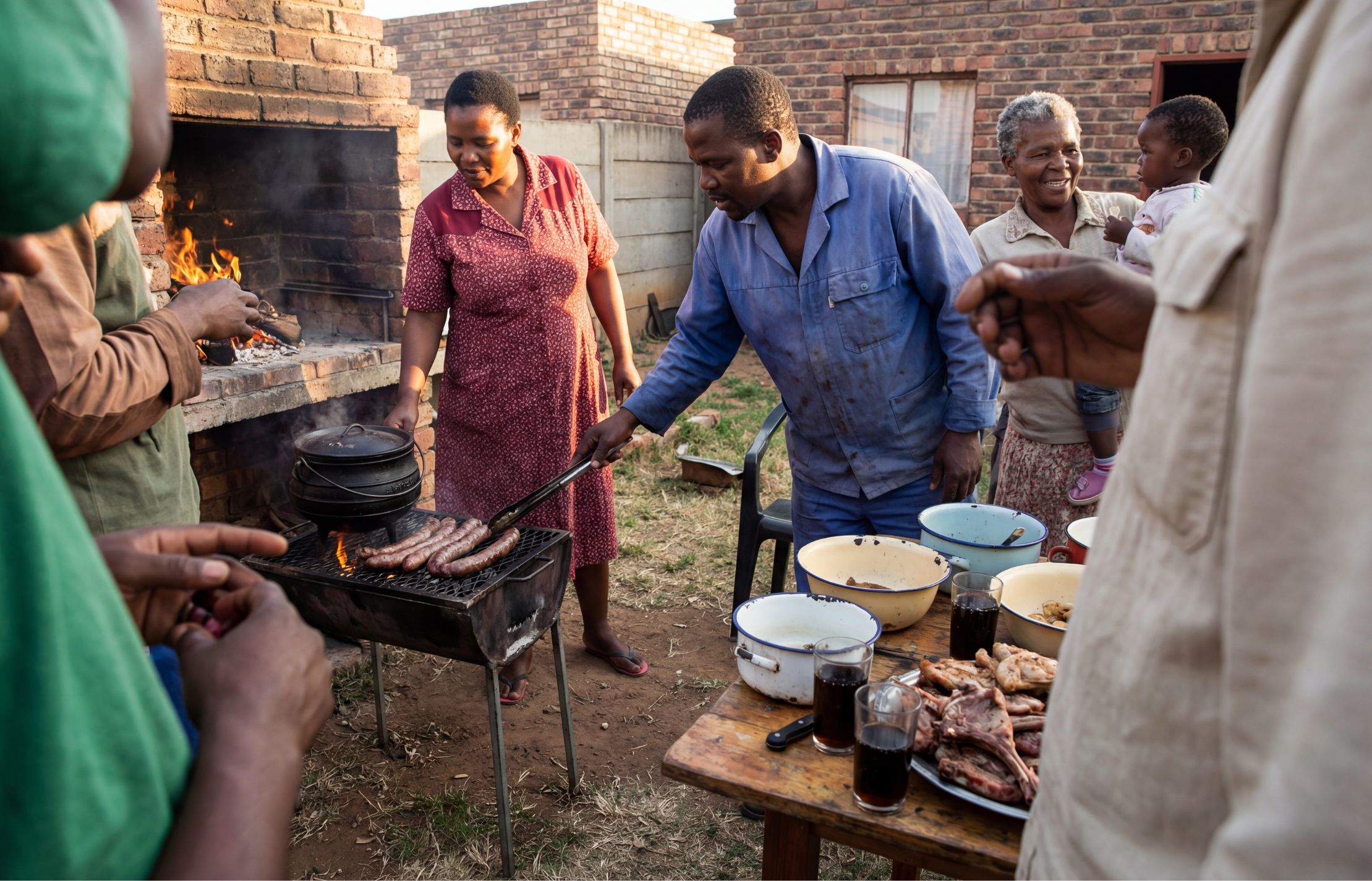
But the food is only half of it. A braai is about the hours around the fire: the conversation, the music, the kids running around, the friends who drift in through the afternoon. Some wear traditional attire from their own culture, turning gatherings into a colorful patchwork of the nation’s diversity. It’s relaxed, warm, and deeply social. That’s the point.
How the Diaspora Celebrates Heritage Day
You don’t have to be in South Africa to feel Heritage Day. South African communities around the world mark it too, including the US and Canada.
Expats fire up braais in backyards and parks. South African shops and butchers sell out of boerewors and biltong. Community groups host gatherings where the boerewors roll takes center stage and Afrikaans, Zulu, Xhosa, and English all mix in the air. For many living far from home, it’s the one day a year that most sharply captures what they miss.
But nothing compares to being home for it. A Heritage Day braai in a Toronto backyard is lovely. But lighting the fire in your family’s own yard, with the people you grew up with, the accents you know, and the specific taste of a braai done exactly the way your family does it, hits differently. That’s why so many South Africans in the US and Canada plan a September trip home.
Why 2026 Is a Great Year to Travel for It
The 2026 calendar does you a favor. Heritage Day lands on a Thursday this year, so many South Africans take the Friday off and stretch it into a four-day weekend, Thursday through Sunday. That’s good news even if you’re the one flying in: it means the family you’re visiting has four full days free to spend with you, even the relatives who don’t have much leave saved up.
One catch: locals spot that long weekend too. They book the domestic flights, guesthouses, and rental cars fast once plans firm up, and travelers from abroad chase the same international seats on the same timeline. Book early, and you get the better fare and the better options. Wait, and you fight the crowd for what’s left.
How to Travel to South Africa for Heritage Day
South Africa’s two main international gateways are OR Tambo International Airport in Johannesburg (JNB) and Cape Town International Airport (CPT). Which you choose depends on where your people are.
From the United States, the route has never been better served. United flies nonstop from Newark to both Johannesburg and Cape Town. Delta flies nonstop from Atlanta to Johannesburg. These direct flights are long (roughly 15 to 17 hours), but they save you a connection.
If a nonstop doesn’t suit your city, one-stop options are plentiful. Airlines like Qatar Airways (via Doha), Emirates (via Dubai), Turkish Airlines (via Istanbul), British Airways (via London), KLM (via Amsterdam), and Ethiopian Airlines (via Addis Ababa) connect from cities all over the US. Connecting fares can be lower than the nonstops, so compare your options.
Flights to South Africa Comparison
| Airline | Route | Type | Best For |
|---|---|---|---|
| United | Newark → Johannesburg / Cape Town | Nonstop | Direct service to either gateway |
| Delta | Atlanta → Johannesburg | Nonstop | Southeast US travelers |
| Qatar Airways | via Doha | One stop | Wide US coverage, strong service |
| Emirates | via Dubai | One stop | Comfortable long-haul option |
| Turkish Airlines | via Istanbul | One stop | Often competitive fares |
| British Airways | via London | One stop | Familiar European connection |
| Ethiopian Airlines | via Addis Ababa | One stop | Good African network links |
A couple of booking tips for this trip: because September is spring in South Africa and includes the Heritage Day long weekend, demand is healthy. You need to book early. And if family is spread between Johannesburg and Cape Town, a travel agent can build a multi-city itinerary, so you land in one and fly home from the other without paying for two separate trips.
More Than a Barbecue
Heritage Day endures because it works on two levels at once. It’s a serious acknowledgment of a complicated, layered history. It’s also a joyful, smoky, laughter-filled gathering around a fire. It asks South Africans to honor where they come from, and it gives them a warm, delicious, unmistakably South African way to do it.
If that fire is calling you home this September, don’t leave the journey to chance. ASAP Tickets agents book flights to South Africa every day and can find fares (including unpublished fares) that don’t show up on regular booking sites. Tell us where home is, and we’ll help you get there in time to light the braai. Call us at (844) 300-7983 at any time of the day, and we’ll explore all your options together!
Frequently Asked Questions About Heritage Day
When is Heritage Day 2026?
Heritage Day is on Thursday, September 24, 2026. It’s a public holiday across South Africa. Because it falls on a Thursday, many people take the Friday off for a four-day-long weekend.
Why is Heritage Day also called Braai Day?
In 2005, a campaign led by Jan Scannell (“Jan Braai”) rebranded the day as National Braai Day, on the idea that the braai is a tradition nearly all South Africans share. The name caught on, gained Archbishop Desmond Tutu as its patron, and Heritage Day and Braai Day are now used almost interchangeably.
What is the history of Heritage Day?
September 24 was originally Shaka Day in KwaZulu-Natal, honoring King Shaka Zulu. When it was left off the 1995 list of public holidays, the Inkatha Freedom Party objected. A compromise reframed the date as Heritage Day as a holiday for all South Africans to celebrate their diversity.
What food is eaten on Heritage Day?
The braai centers on grilled meats like boerewors, lamb chops, steak, and chicken, served with sides such as pap (maize porridge), chakalaka (spicy vegetable relish), salads, and bread. The fire must be wood or charcoal.
Do South Africans abroad celebrate Heritage Day?
Yes. South African communities in the US, UK, Canada, Australia, and elsewhere hold Heritage Day braais, stock up on boerewors and biltong, and gather as a community. For many, it’s the day that most captures home.
Which airports should I fly into for Heritage Day?
The two main international gateways are OR Tambo International in Johannesburg (JNB) and Cape Town International (CPT). Choose based on where your family and celebrations are. United flies nonstop from Newark to both; Delta flies nonstop from Atlanta to Johannesburg.
Further Reading
- Cheap Flights to South Africa: How to Find the Best Deals
- Flights to Kigali: The Cheapest and Busiest Times — and What Drives the Difference
- Last-Minute Flights to Lagos: How to Book a Summer Trip Home Without Overpaying

Get it right to your inbox by subscribing to ASAP Tickets weekly emails featuring the hottest flight deals from US to the .
Massive savings • Unsubscribe at any time.
You were sucessfully subscribed
Please check your inbox to confirm the subscription