


EU flight compensation just got its biggest shake-up in over a decade. Airlines fought a reform of Europe’s passenger-rights rules for thirteen years. In July 2026, it passed anyway — and it wasn’t close. The European Parliament approved the overhaul with 646 MEPs in favor, 12 against and three abstentions. Then the Council gave final clearance on 13 July.
So why should you care? Because this affects you if you fly to, from, or within Europe. Even as an American. Even on a US airline. Below, we break down what changed, what you can already claim today, and how EU flight compensation stacks up against flying in the US.
First, the One Thing to Understand
This reform doesn’t shrink your rights. It also doesn’t blow up the system. In fact, the compensation amounts stay roughly the same.
Instead, what changes is everything around the money. How fast airlines must pay you. What excuses they can still use. The fees they can no longer charge. And how prices show up before you book. Airlines resisted for over a decade precisely because these “small” changes close the loopholes they leaned on.
There is one catch, though. The new rules take effect in 2027, not today. But here’s the important part: the compensation you can already claim under existing rules is very real. Most passengers never collect it.
EU Flight Compensation: What You’re Owed in Cash
Under both today’s rules and the new ones, a flight delayed 3+ hours or canceled at short notice can entitle you to cash. Not a voucher. Not miles. Actual money.
Here’s the current structure:
- €250 for flights of 1,500 km or less
- €400 for intra-EU flights and those between 1,500–3,500 km
- €600 for longer flights
The new law keeps this framework — and that was the whole fight. For over a decade, airlines lobbied to raise the three-hour trigger to four, five, or even six hours. In the end, lawmakers rejected that push. So the three-hour threshold stays, and the €250–€600 bands remain. Meanwhile, compensation is measured at arrival, not departure. Better still, airlines pay it per passenger. So a family of four on a badly delayed transatlantic flight could be looking at a four-figure sum.
Crucially, this is compensation and not a refund. You keep the flight and get the money.
The New Deadlines: a Clock on the Airline, Not Just You
Here’s the biggest practical shift. Today, claims routinely vanish into customer-service limbo. Now, the new rules put both sides on a timer.
You’ll have nine months to file a compensation request. Meanwhile, airlines will have just 30 days to either pay up or invoke extraordinary circumstances. In short: no more silence, and no more waiting forever.
The Bait-and-Switch Fare is Dying
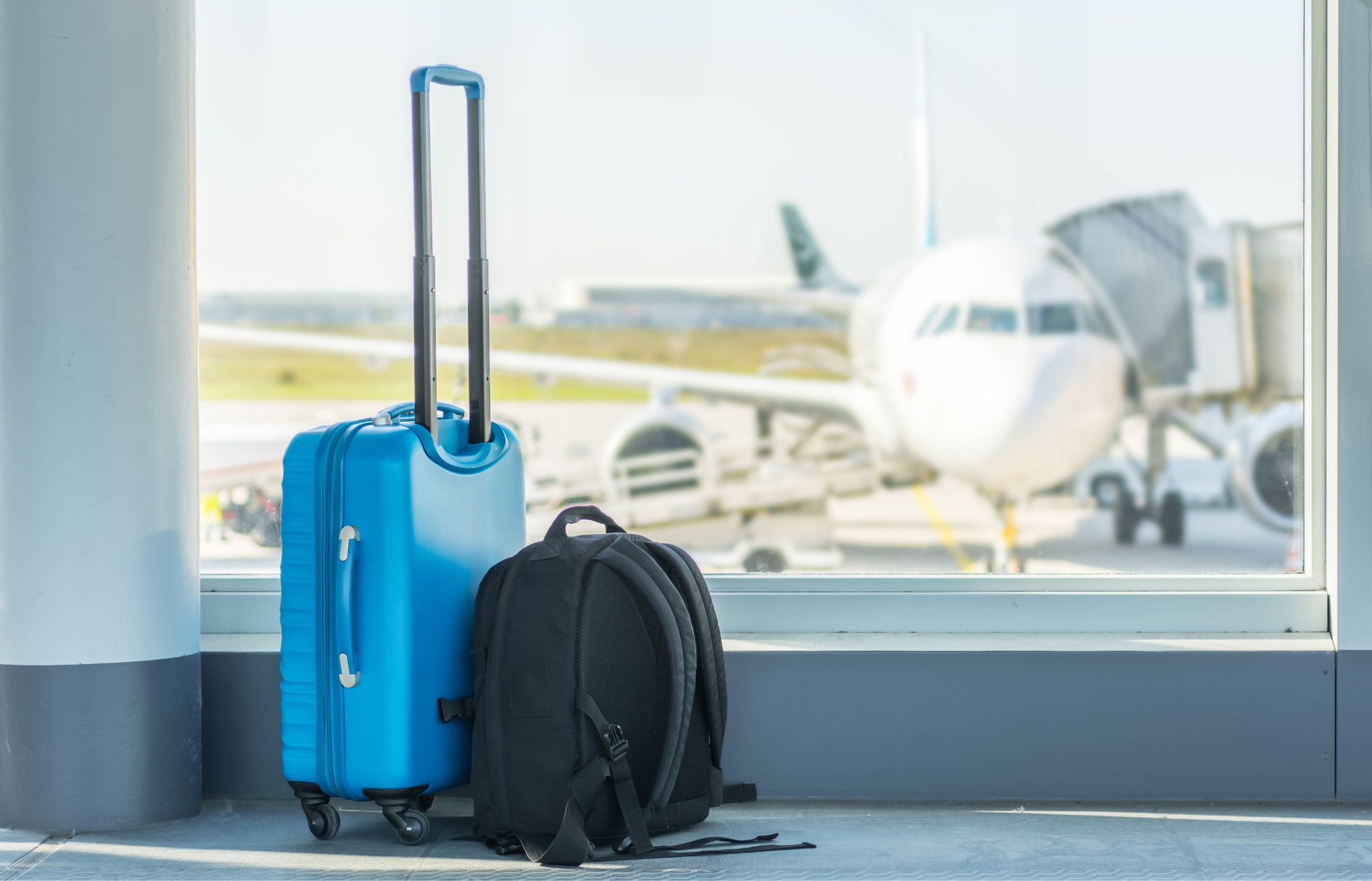
You know the trick. A $19.99 headline fare balloons to $45 once you add a carry-on at checkout. The new rules attack this head-on.
From 2027, all airlines must display the fare including carry-on luggage right at the start of the booking process on search portals and intermediaries alike. As a result, the first number you see becomes the number you can actually compare between airlines.
And if you travel light, you’ll still save. Passengers keep the right to a free personal item measuring 40 cm x 30 cm x 15 cm. Airlines may also still offer cheaper tickets to travelers who skip hand luggage on purpose. This matters because low-cost carriers like Ryanair and easyJet currently charge extra for small wheeled bags and backpacks.
Two Petty Fees, Gone
The new regulation also kills two of the industry’s most disliked practices.
Free name corrections. A single wrong letter in your name used to cost real money to fix. Not anymore: airlines can no longer charge fees to correct spelling errors.
No more being herded into the app. You’ll have the right to get your boarding pass digitally at check-in. No account required. No specific app required.

“Extraordinary Circumstances”: the Airline’s Favorite Excuse
Airlines dodge compensation by claiming a disruption fell beyond their control. The reform tightens this considerably.
The agreement now defines extraordinary circumstances as events beyond the airline’s control and unrelated to its normal operations. It includes a defined (non-exhaustive) list. It also keeps the burden of proof on the airline, including proof that it took every reasonable step to avoid the disruption. On top of that, an airline can’t stretch one problem across a whole day’s flights. It can only invoke it for the affected flight, or at most one of the three preceding flights in the aircraft’s rotation.
So how has this played out in EU case law? As a rough guide: severe weather, air-traffic-control strikes, and genuine security threats have generally counted as extraordinary, meaning no compensation. However, routine technical faults, crew shortages, and a plane simply arriving late from a previous leg generally have not. In fact, “technical issues” is both the most common rejection reason and one of the most commonly overturned. Therefore, a rejection isn’t the end of the road.
Care While You Wait: Separate from the Money
Compensation is one thing. But during a long disruption, the airline also owes you care, free of charge.
Broadly, that means refreshments and meals as the wait drags on, two phone calls or emails, and, if you’re stuck overnight, a hotel plus transport to and from it. Moreover, if the delay runs long enough and you decide not to fly at all, you’re entitled to a full refund of the unused ticket.
Just remember: airlines rarely offer this proactively. So ask at the desk. And keep your receipts if you arrange things yourself, because reasonable costs are reimbursable.
Here’s exactly what that care covers — and when it kicks in:
| What you get | What it means | When it applies |
|---|---|---|
| 🍔 Food & drink | Meals and refreshments in reasonable relation to your wait | After 2 hrs (flights ≤1,500 km), 3 hrs (1,500–3,500 km), or 4 hrs (over 3,500 km) |
| 📞 Communication | Two free phone calls, emails, or faxes | Same delay thresholds as above |
| 🏨 Hotel stay | A hotel room when you’re forced to wait overnight | When your rebooked flight departs the next day |
| 🚕 Transport | Rides between the airport and your hotel | Alongside any overnight hotel stay |
| 💶 Full refund | Your money back for the unused ticket if you abandon the trip | When the delay reaches 5+ hours and you choose not to fly |
One more thing: the 2027 reform strengthens this care even further. It locks in refreshments every two hours, a meal once the delay passes three hours, and hotel stays of up to three nights during long disruptions, and that duty holds even when the delay counts as an extraordinary circumstance.
Does EU Flight Compensation Apply to Americans?
Yes, and this surprises many people. EU flight compensation follows the flight, not your passport.
Here’s the gist:
- Any flight departing an EU airport is covered (any airline, any nationality).
- Any flight arriving in the EU on an EU airline is covered.
So New York → Rome on a US carrier isn’t covered on the way out. But Rome → New York is. Same trip, different rules each direction. Similar regimes also apply in Iceland, Norway, Switzerland, and the UK, which kept a near-identical version after Brexit.
How EU Flight Compensation Compares to Flying in the US
If you’re used to European protections, US air travel runs on completely different assumptions. No single, comprehensive passenger-rights law exists. Instead, the Department of Transportation (DOT) enforces specific rules for specific situations, and leaves the rest to each airline.
The headline difference is simple. The US has no equivalent to EU261’s fixed cash compensation. Unlike EU rules, which pay a set €250–€600, the US system only guarantees a refund of what you paid. No extra cash for your time or hassle.
Still, US travelers do get some solid protections:
- Automatic refunds. Since 2024, airlines must automatically refund significantly delayed or canceled flights when you choose not to travel — generally 3+ hours domestic, 6+ hours international. They can’t force credits on you.
- Denied-boarding compensation. If you’re involuntarily bumped, airlines must pay up to $2,150 in cash. Not a voucher.
- Tarmac-delay limits. Airlines can’t hold you on the tarmac beyond 3 hours domestically or 4 hours internationally without letting you off.
- Baggage liability. Airlines are liable for delayed, damaged, or lost bags up to $4,700 per passenger domestically, with the Montreal Convention covering international trips.
What US travelers don’t get: mandated meals, drinks, hotels, or transport during long delays. Those stay goodwill gestures unless an airline writes them into its contract of carriage.
The gap may narrow, though. The current administration rolled back a proposed rule on preventable delays. In response, a group of senators introduced the Flight Delay and Cancellation Compensation Act in December 2025. It would mandate cash compensation in line with EU and Canadian rules: at least $300 for a delay over three hours, and at least $600 for six hours or more. For now, however, it hasn’t become law. So the transatlantic divide stands.

The Bottom Line
Europe just locked in a stronger, clearer deal for passengers. The payouts you already knew are now genuinely harder for airlines to wriggle out of. On top of that, you get real wins on baggage transparency, junk fees, and honest pricing. It all lands in 2027.
But don’t wait for 2027. The €250–€600 in EU flight compensation already exists today. And the single most common mistake travelers make is never claiming it. So if a European airport left you stranded this year, your claim may still be alive.
Sorting out a claim, or planning a smoother trip next time, is exactly where a real person helps. Our ASAP Tickets agents are available 24/7 to help you find better routes and deals on complex international journeys. Call us at (844) 300-7983 at a convenient time.
Frequently Asked Questions
How much is EU flight compensation for a delayed flight?
It depends on distance. You can claim €250 for flights up to 1,500 km, €400 for medium-haul flights, and €600 for long-haul flights — as long as you arrive 3+ hours late. Despite years of airline pressure to raise the trigger to four hours or more, the 2026 reform kept both this structure and the three-hour threshold, so these amounts still apply when the new rules take effect in 2027.
How long do I have to claim EU flight compensation?
Under the new rules, you’ll have nine months to file a claim. In turn, the airline must pay within 30 days or formally invoke extraordinary circumstances. So don’t sit on a valid claim.
Does EU flight compensation apply to US citizens?
Yes. The rules follow the flight, not your nationality. Any flight leaving an EU airport is covered, and any flight arriving in the EU on an EU airline is covered too. Your passport doesn’t change that.
When do the new EU passenger rights take effect?
The reform takes effect in 2027. However, the current €250–€600 compensation framework already applies today, so you can claim on eligible past flights right now.
What counts as “extraordinary circumstances”?
These are events beyond the airline’s control, such as severe weather, air-traffic-control strikes, or genuine security threats — and in those cases, no compensation is due. Routine technical faults, crew shortages, and late-arriving aircraft usually don’t qualify, which means you may still be owed money.
Can I claim EU flight compensation for a canceled flight?
Yes. A short-notice cancellation can entitle you to the same €250–€600 cash compensation as a long delay. Importantly, that’s separate from your right to a full refund of the ticket.
Further Reading
More travel tips from ASAP Tickets
- Power Bank Rules on Planes in 2026: What Changed (and What’s Still Allowed) — another 2026 rule shift worth knowing before you fly.
- How to Use a Mobile Boarding Pass — now that airlines can’t force you into their app, here’s how to go digital on your own terms.
Official passenger-rights resources
- Your Europe: Air Passenger Rights — the EU’s official guide, including how to escalate a claim to your national authority.
- European Commission: Know Your EU Passenger Rights — the Commission’s official rundown of the 2026 reform.

Get it right to your inbox by subscribing to ASAP Tickets weekly emails featuring the hottest flight deals from US to the .
Massive savings • Unsubscribe at any time.
You were sucessfully subscribed
Please check your inbox to confirm the subscription