


Christopher Nolan’s The Odyssey didn’t just open. It made a loud entrance. The $250-million retelling of Homer’s poem pulled in $124.5 million at home on its opening weekend (July 17). Worldwide, it took $264.1 million. That’s the biggest global debut of Nolan’s career (per CNBC). It also landed a rare “A” CinemaScore and a 97% on Rotten Tomatoes. Universal is calling it a “mythic action epic,” and audiences seem to agree. The first question a lot of them are asking: where was The Odyssey filmed? Here’s the part that matters if you own a passport: almost none of it is fake. The filming locations in The Odyssey aren’t sets. They’re real places you can fly to.
Nolan built the whole film around one simple rule: no green screens, no digital backdrops, wherever he could avoid them. To pull that off, he shot entirely on IMAX film cameras across six countries in 91 days. He wanted real coastlines, castles, volcanoes and glaciers rugged enough to pass for the edge of Homer’s ancient world. Matt Damon, who plays Odysseus, told Variety it “felt more like an expedition than a film.”
So the “sets” are real places. If you want, you can stand on the black sand where Odysseus meets the dead. You can also climb the fortress that became his home. Finally, you can swim off the goat island Homer named 3,000 years ago. Below is a full guide to The Odyssey filming locations. For each country, you’ll get what it became on screen, and exactly how to fly there.
The Odyssey Filming Locations at a Glance
Here’s every real filming location in The Odyssey, what it plays on screen, and the nearest airport to each:
| Country | On screen | Real filming location(s) | Nearest airport | Best time to go |
|---|---|---|---|---|
| Greece | Ithaca’s coast & the Cyclops cave | Voidokilia Beach, Nestor’s Cave, Methoni Castle, Acrocorinth (Messinia, Peloponnese) | Kalamata (KLX) | May–Jun, Sep |
| Morocco | Troy | Aït Benhaddou, Essaouira, Marrakech, Tahanaoute | Marrakech (RAK) | Spring & autumn |
| Italy | Odysseus’s Ithaca palace & the islands of the winds | Favignana / Castello di Santa Caterina, Aeolian Islands (Stromboli) | Palermo (PMO) or Trapani (TPS) | Late spring, early autumn |
| Iceland | The underworld (Hades) | Hjörleifshöfði, Snæfellsnes, Markarfljót, Landeyjahöfn | Keflavík (KEF) | Summer (sun) or winter (aurora) |
| Scotland | The sea voyage & Odysseus’s ship | Moray Firth coast, Culbin Forest, Findlater Castle, Buckie Harbour | Inverness (INV) | May–Sep |
| Malta | Calypso’s island (Ogygia) | Gozo — Calypso’s Cave & Ramla Bay | Malta (MLA) | Year-round |
| Norway & USA (water shots) | Open-sea & tank sequences | Stavanger, Norway; Universal Studios Falls Lake, Los Angeles | Stavanger (SVG) | — |
The full breakdown of each destination — and how to fly there — is below.
1. Greece: The Beaches, Caves and Fortresses of the Peloponnese
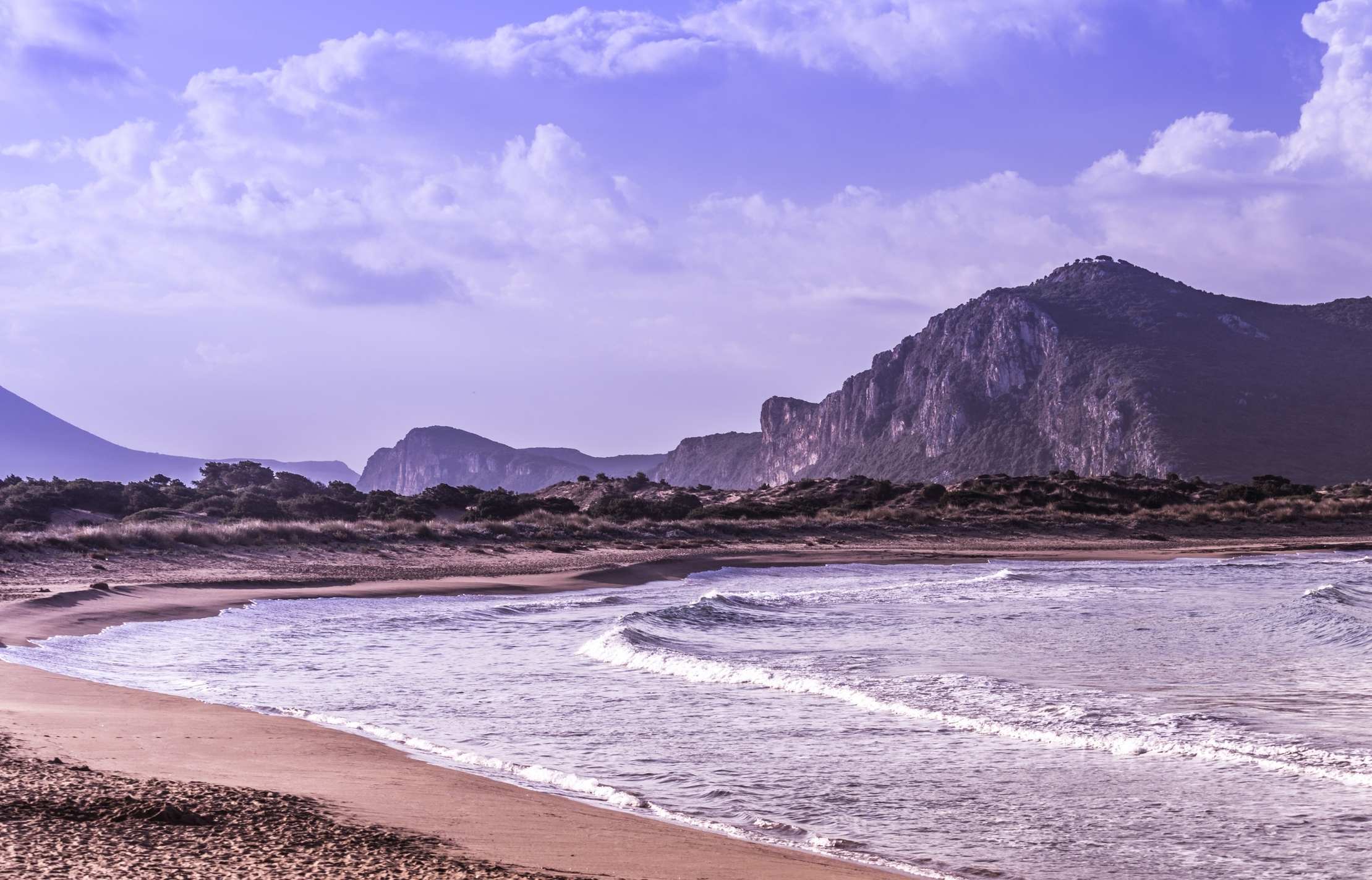
One country was never in doubt: the one Odysseus spends ten years trying to reach. Nolan filmed across Messinia, in the southern Peloponnese, in March and April 2025. It’s the most literal overlap between myth and map in the whole film.
The showpiece is Voidokilia Beach, a near-perfect horseshoe of white sand and turquoise water. Locals and travel writers regularly rank it among Europe’s most beautiful beaches. Just above it sits Nestor’s Cave, reportedly the setting for the film’s Cyclops sequence with Polyphemus. Two fortresses feature too. The sea-ringed Methoni Castle is a 13th-century Venetian stronghold that sits half in the water. The towering Acrocorinth is a fortified acropolis nearly 2,500 years old, high above ancient Corinth. Nolan’s crew even floated a full-scale ancient warship into Pylos harbour and trained extras to row it.
Fly there: Your closest airport is Kalamata (KLX), about an hour from the Voidokilia and Pylos coast. Seasonal routes run in from across Europe. Out of season, fly into Athens (ATH) and drive the scenic 2.5–3 hours down. Go in May–June or September. The light is film-grade, and the beaches aren’t yet shoulder-to-shoulder.
2. Morocco: Troy, Built in the Desert
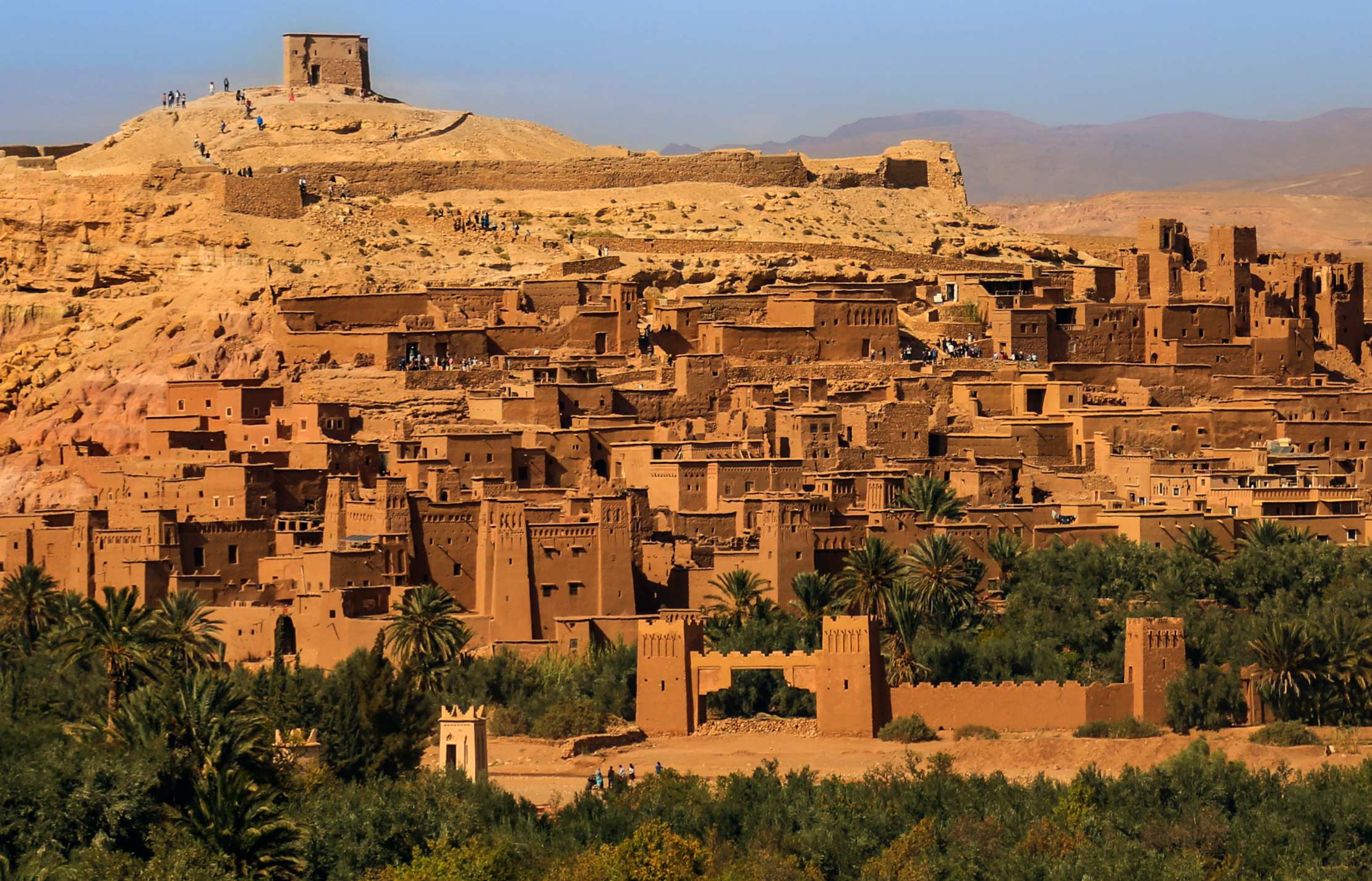
Every odyssey needs a starting line, and Odysseus’s is the smoking ruin of Troy. Nolan built it at Aït Benhaddou, the UNESCO-listed earthen citadel near Ouarzazate. Its mud-brick towers have doubled for the ancient world in Gladiator, Lawrence of Arabia and The Mummy. Reports suggest the production hired thousands of extras and spent weeks building the set. Nolan had carried the Trojan Horse sequence in his head for two decades: he was briefly attached to Wolfgang Petersen’s Troy in the early 2000s, and finally realized his version on Essaouira’s sands.
Those same Essaouira beaches — the walled, breezy surf town is Morocco’s “Windy City” — also became the launch point for Odysseus’s voyage home. The crew shot extra scenes around Marrakech and Tahanaoute, and gathered further coastal footage south near Dakhla.
Fly there: Marrakech (RAK) is the obvious gateway, with direct flights from most of Europe and connections from North America. From there it’s about a four-hour drive over the Atlas Mountains to Aït Benhaddou. You can also fly the short hop to tiny Ouarzazate (OZZ). Essaouira has its own small airport (ESU), but it’s an easy 2.5-hour drive from Marrakech. Spring and autumn dodge both the desert heat and the coastal wind.
3. Italy: Ithaca On a Sicilian Goat Island, Plus the Islands of the Winds
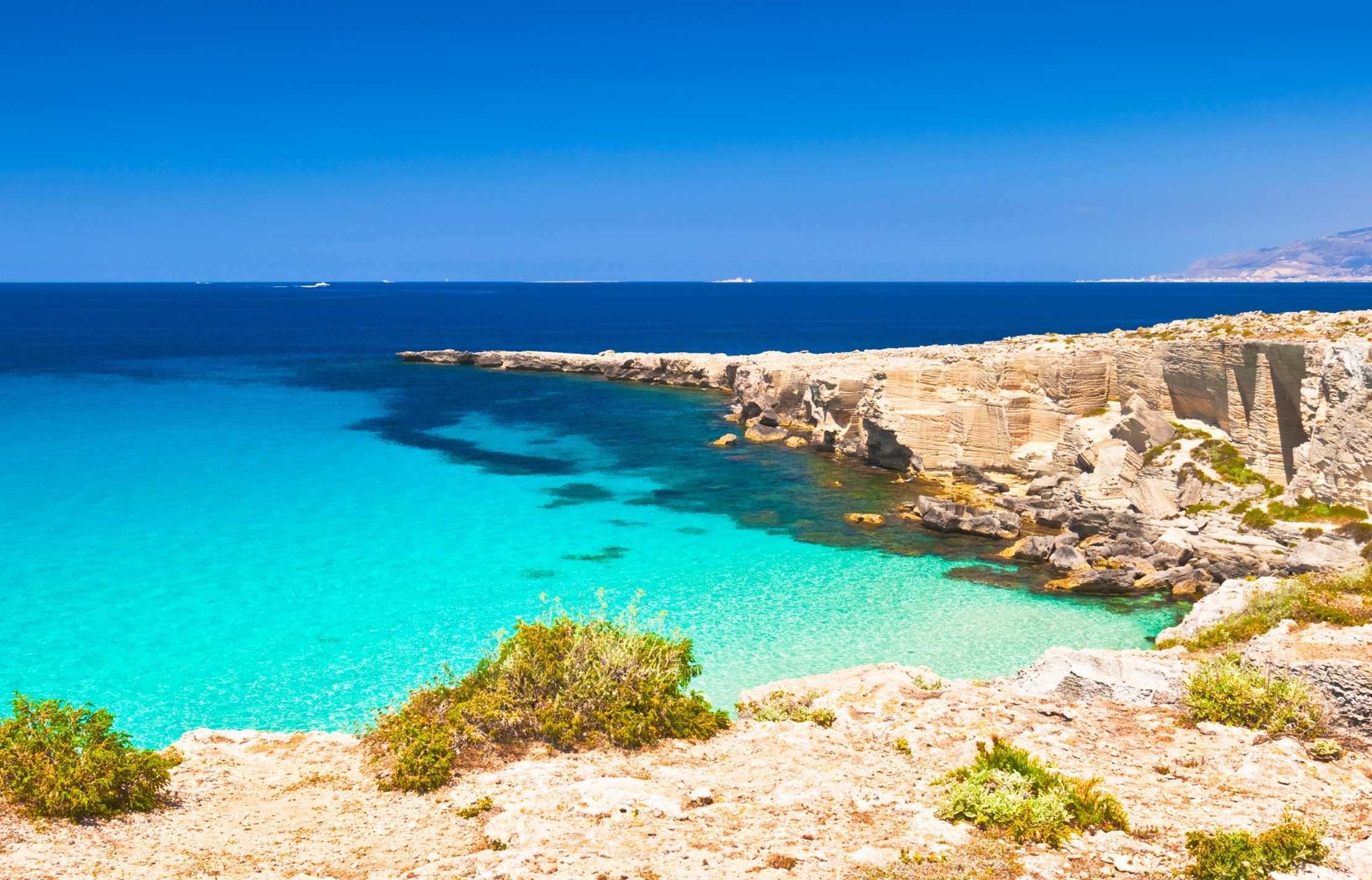
Here’s the twist Homer fans will love. Nolan didn’t film Odysseus’s kingdom of Ithaca on the real island of Ithaca at all. He shot it on Favignana, the largest of the Egadi Islands off Sicily’s northwest coast. It’s also one of the few real places Homer actually names — the “goat island” where Odysseus lands to resupply.
Favignana’s ruined Castello di Santa Caterina became the Ithacan palace. Nolan called it “a deeply impractical location.” Cast and crew climbed roughly 900 feet up to it each day, while helicopters ferried the IMAX gear. It paid off. “When we climbed up to the castle and saw the view,” Nolan recalled, “it just felt like Odysseus’ home.” The production also filmed across the Aeolian Islands to the north. The ancients tied this volcanic archipelago to Aeolus, keeper of the winds. Its star, Stromboli, has erupted almost continuously for millennia.
Fly there: Fly into Palermo (PMO) or Trapani (TPS). From Trapani, the fast ferry or hydrofoil reaches Favignana in under 30 minutes. For the Aeolians, base yourself near Catania (CTA) and sail from Milazzo. Late spring and early autumn are ideal; August is glorious but packed.
4. Iceland: The Underworld
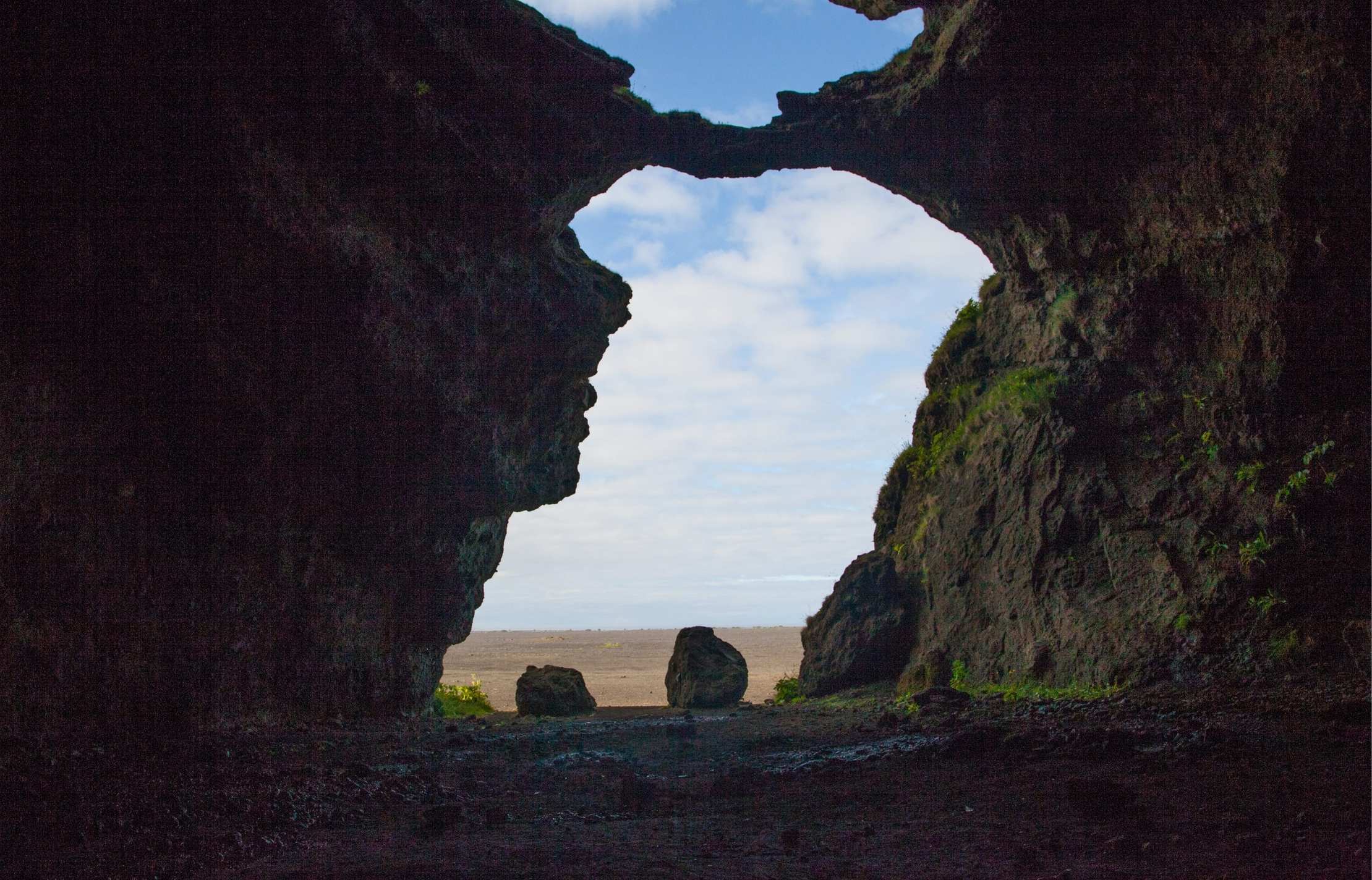
Odysseus sails to the land of the dead to consult the blind prophet Tiresias. For that, Nolan didn’t reach for a computer. He flew the production to southern Iceland. “I knew early I wanted the landscape of Iceland to portray Hades,” Nolan says in the film’s production notes. “This journey north, further and further into the cold, couldn’t be further away from Odysseus’s home in Ithaca.”
Nolan shot the underworld on the black sands and caves of Hjörleifshöfði, a headland east of Vík. Filming ran under June’s all-night midnight sun. Three more spots feature: the nearby Snæfellsnes peninsula, the glacial river Markarfljót, and the harbour of Landeyjahöfn. That’s where the crew moored the Viking longship. Steaming geothermal vents and stark volcanic flats did the rest. The sequence looks otherworldly, again with no digital environment at all.
Fly there: Everything routes through Keflavík (KEF) near Reykjavík, one of the best-connected airports between North America and Europe. Hjörleifshöfði is about a 2.5–3 hour drive east along the south coast. You’ll want a rental car. This corner of Iceland isn’t about comfort. The payoff is standing inside a Nolan frame. Summer gives you the midnight sun; winter, the aurora.
5. Scotland: Odysseus’s Ship and the Moray Coast
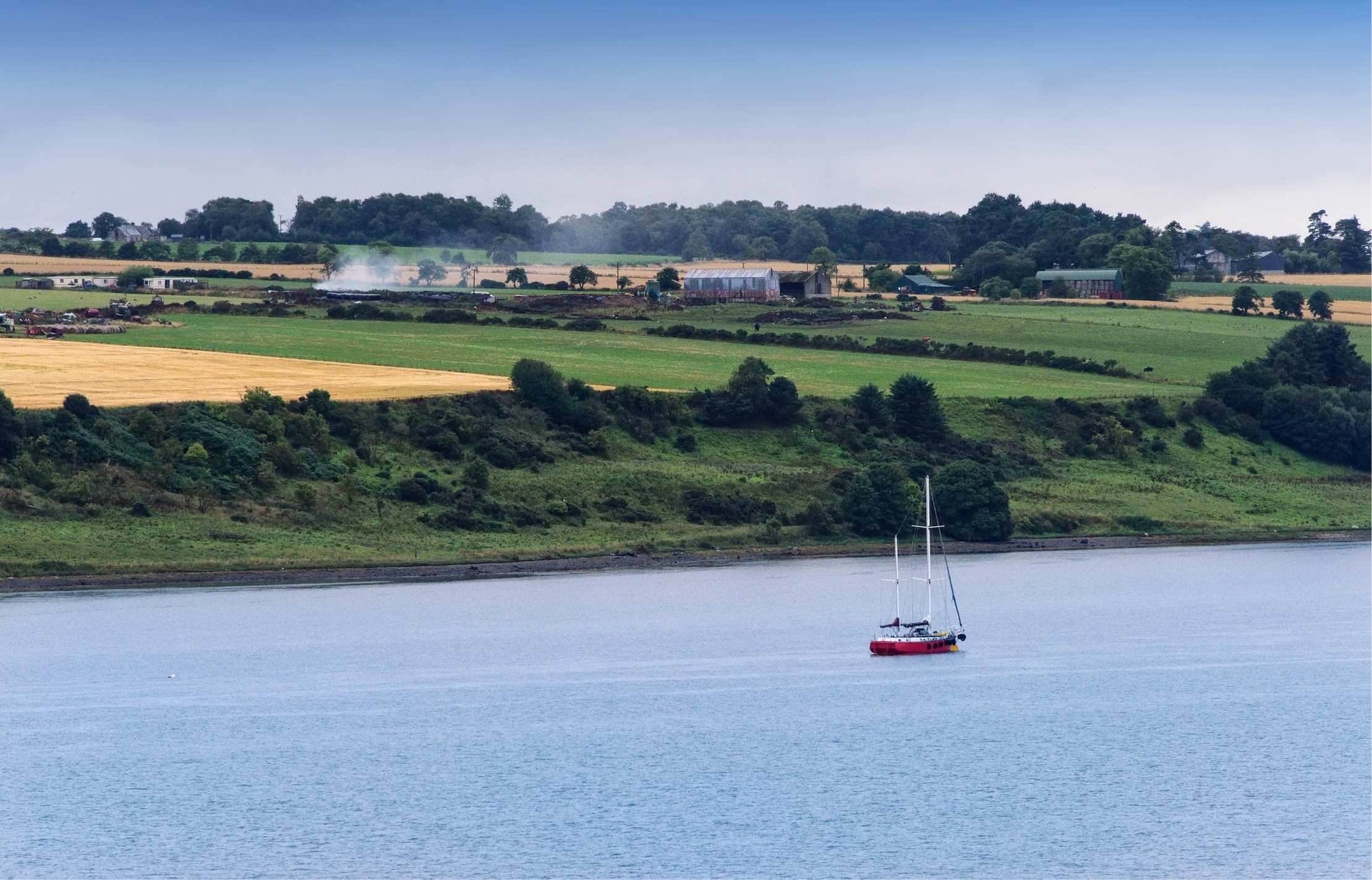
Nolan had filmed in Scotland only once before, for the prologue to The Dark Knight Rises. This time the country’s northeast did heavy lifting. The Moray Firth coast is a roughly 500-mile inlet known for its sea stacks and resident bottlenose dolphins. It anchored several maritime sequences. One is Odysseus’s brutal run-in with the cannibal Laestrygonians, which Nolan shot in the pine woodland of Culbin Forest. Cliff-top Findlater Castle near Cullen appears too.
Odysseus’s ship stole headlines here as well. The Draken Harald Hårfagre turned up moored at Buckie Harbor, doubling as his vessel. It’s billed as the largest Viking longship built in modern times. (Purists have grumbled about a Norse ship playing a Greek one. Take it up with Homer.)
Fly there: Inverness (INV) is the gateway, roughly an hour from the Culbin and Findhorn stretch of coast. It connects via London, Amsterdam and other hubs. Base yourself in a fishing village like Findhorn or Cullen. May to September gives you the long northern daylight the shoot ran on.
6. Malta: Calypso’s Island
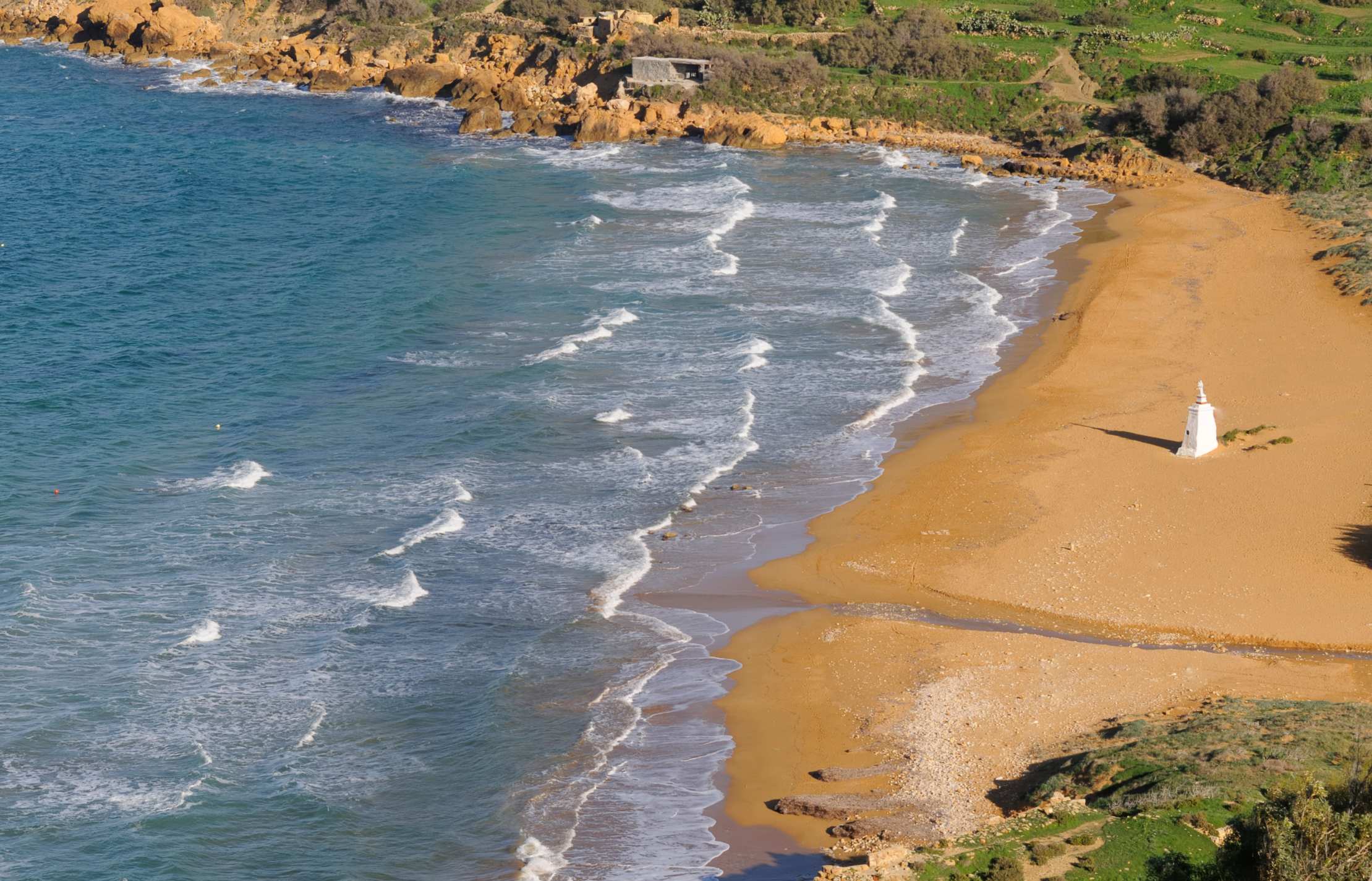
The most seductive of Odysseus’s stops (and the saddest) is Ogygia. This is the island where the nymph Calypso keeps him for seven years. She offers immortality if he’ll only stay. He refuses. Homer gives us the hero not as a warrior, but as a man on a beach, weeping for home. Malta has long been identified with Ogygia, and the production used it for water sequences. It’s where that world takes shape.
Head to Malta’s sister island of Gozo. There, a cliff-top cave known as Calypso’s Cave looks down over Ramla Bay, a sweep of rust-red sand. It’s the kind of view you could, plausibly, stare at for seven years. Malta itself layers in more history than most countries twice its size. Think Neolithic temples older than Stonehenge, Phoenician and Roman remains, and the fortress-city of the Knights of St John.
Fly there: Malta International (MLA) connects well across Europe and stays easy to reach year-round. Gozo is a short ferry from the main island. Malta’s mild climate makes it a genuine shoulder-season pick. It even works in winter, when the rest of this list shuts down.
Bonus: The Water Shots — Norway and a Hollywood Tank
Not every wave was Mediterranean. Much of the voyage was shot on real open water, not in a tank — which is exactly why the shoot was so brutal. Describing the sea work to Empire, Nolan said the team wanted “to capture how hard those journeys would have been for people. And the leap of faith that was being made in an unmapped, uncharted world.”
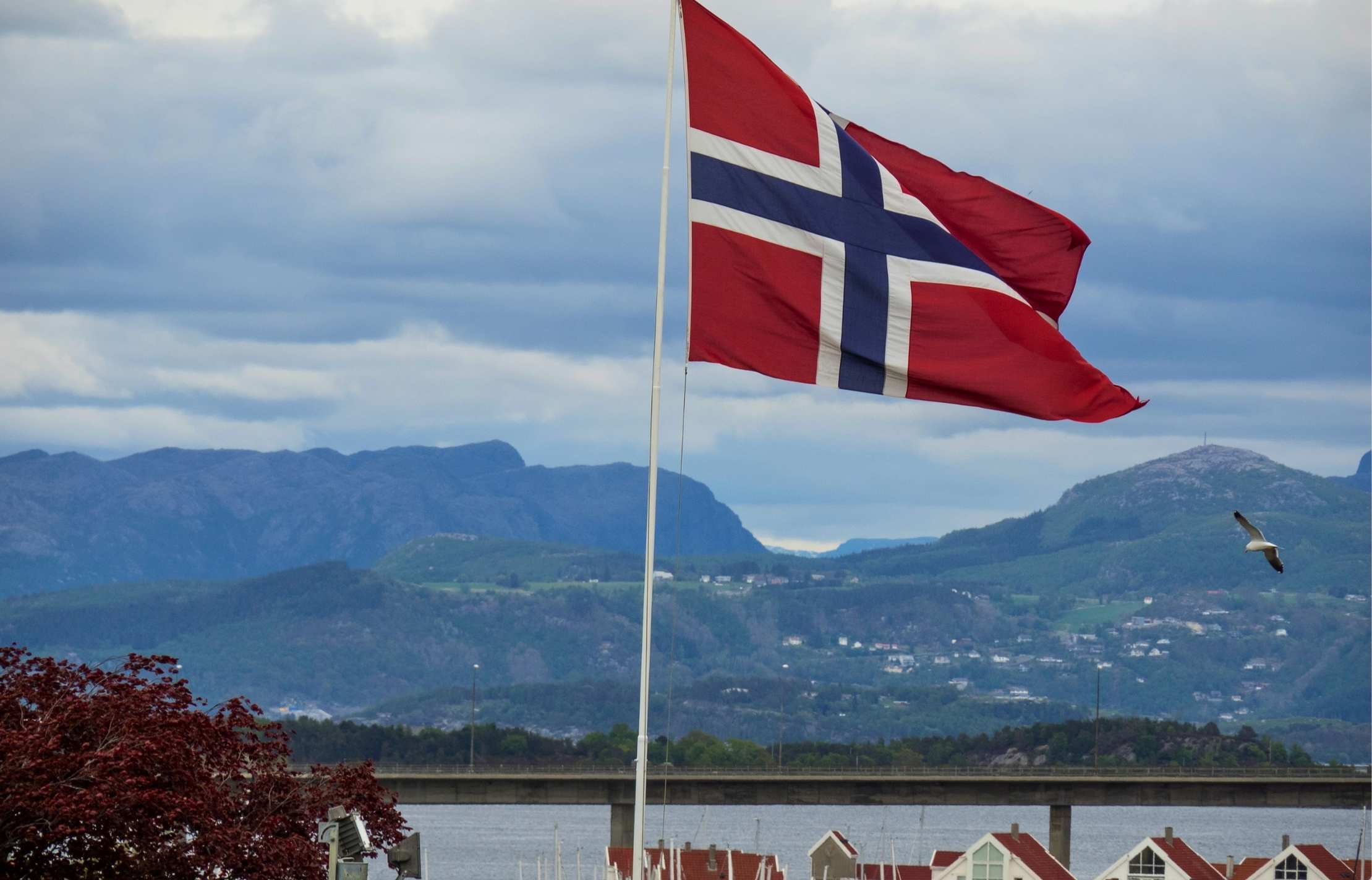
Nolan’s team originally found the seafaring Draken longship in Stavanger, Norway. It came with its own sea-ready Viking crew, who ended up in many sequences. For reshoots, the production needed stable, controlled water. So it decamped to the Falls Lake tank on the Universal Studios backlot in Los Angeles. That’s the only stretch of the film shot in the US. And you won’t see a scrap of American scenery in it.
You can’t easily book a night on a Viking ship. But Stavanger is a beautiful, underrated fjord gateway (fly into SVG). Go if you want to say you started where Odysseus’s ship did.
Plan Your Own Odyssey: How to Visit The Odyssey Filming Locations
Six countries. One voyage. Nolan’s obsession with real locations turned his call sheet into a bucket list. Greek beaches. A Moroccan citadel. A Sicilian island fortress. Icelandic black sand. A Scottish sea coast. A Maltese cliff cave. Every one of them is bookable right now, while the film is the only thing anyone’s talking about.
You don’t have to do all six in one trip. Then again, you could! It’s a stunning multi-stop route through Europe and North Africa. Otherwise, pick the leg that pulls hardest and start there.
To make it easy, here are three ready-made routes. One is a single-country trip and two combinations with the flights that make them work from the US.
Itinerary 1: Greece in a week
The simplest way in, and the most mythologically faithful. Base yourself in Messinia and cover the Peloponnese sites at an easy pace.
Route: Athens, then south to Pylos for Voidokilia Beach, Nestor’s Cave, Methoni Castle and a side trip to Acrocorinth. Roughly 7–8 days.
Flights: Nine US cities fly nonstop to Athens (ATH) for 2026 — including New York, Boston, Chicago, Atlanta, Philadelphia, Charlotte, Washington and, new this year, Dallas — on Delta, United, American and Norse Atlantic. It’s about a 10-hour hop from the East Coast. From Athens, take the 45-minute domestic flight to Kalamata (KLX) or drive down in around three hours.
Best for: First-timers and anyone with a single week to spend.
Itinerary 2: Greece + Sicily — the Ithaca run
Follow Odysseus’s own logic. Pair the Greek mainland with the Sicilian island that stood in for his home.
Route: Start in the Peloponnese, then island-hop to Sicily for Favignana’s palace fortress and the smoking Aeolian Islands. Around 10–12 days.
Flights: Fly nonstop into Athens as above. Then connect Athens to Palermo (PMO) or Catania (CTA) in about two hours, and catch the 30-minute ferry from Trapani to Favignana. Book it “open-jaw” (into Athens, home out of Sicily) so you never double back.
Best for: The Odysseus-route purist who wants both halves of the story.
Itinerary 3: Iceland + Scotland — the northern passage
The film’s most dramatic landscapes, and the easiest combo to reach from the US. This is the underworld and the high-seas leg.
Route: Reykjavík and Iceland’s south coast for Hjörleifshöfði, then Scotland’s Moray coast for the Laestrygonian forests and Odysseus’s ship. About 8–10 days.
Flights: Icelandair flies nonstop to Keflavík (KEF) from a dozen US cities, including New York (under six hours), Boston, Chicago, Seattle and Denver. From Reykjavík, it’s a 2.5-hour nonstop to Edinburgh on Icelandair, easyJet or Jet2. Drive three hours north to the Moray coast, or hop to Inverness (INV). Fly home from Edinburgh via London or Dublin.
Best for: Landscape-chasers and East Coast travelers who want maximum drama, minimum flying time.
Ready to sail? Our travel experts hunt down the lowest fares to every destination on this list. That includes Kalamata, Marrakech, Palermo, Keflavík, Inverness and Malta. Get in touch with ASAP Tickets or search flights and let us plot the route. You can call us 24/7 at 844-300-7983 and ask about flights to any of these locations!
Frequently Asked Questions About The Odyssey’s Filming Locations
Where was The Odyssey filmed?
Christopher Nolan filmed The Odyssey on location across six countries: Greece, Morocco, Italy, Iceland, Scotland and Malta. He shot additional water sequences in Norway and at Universal Studios in Los Angeles.
Where was Troy filmed in The Odyssey?
Nolan built Troy at Aït Benhaddou, the UNESCO-listed earthen citadel near Ouarzazate in Morocco. The same location has doubled for the ancient world in Gladiator and Lawrence of Arabia.
Was The Odyssey filmed in Greece?
Yes. Nolan shot across Messinia in the southern Peloponnese, including Voidokilia Beach, Nestor’s Cave, Methoni Castle and Acrocorinth. The nearest airport is Kalamata (KLX).
Where is the underworld scene in The Odyssey filmed?
Nolan filmed the underworld on the black volcanic sands and caves of Hjörleifshöfði in southern Iceland. Fly into Keflavík (KEF) to reach it.
Which real island played Ithaca?
Nolan filmed Odysseus’s kingdom of Ithaca on Favignana, off Sicily’s northwest coast, using the ruined Castello di Santa Caterina as the palace. Reach it via Palermo (PMO) or Trapani (TPS), then a short ferry.
Where was Calypso’s island filmed?
Calypso’s island (Ogygia) takes shape on Gozo, Malta’s sister island, home to Calypso’s Cave above Ramla Bay. The gateway airport is Malta International (MLA).
Did Nolan use CGI for the locations?
Mostly no. Nolan shot on real locations with IMAX film cameras and avoided green screens and digital backdrops wherever possible — which is why every setting here is a place you can actually visit.
Is The Odyssey out yet?
Yes. The Odyssey opened on July 17, 2026, and is in theaters now.
Get it right to your inbox by subscribing to ASAP Tickets weekly emails featuring the hottest flight deals from US to the .
Massive savings • Unsubscribe at any time.
You were sucessfully subscribed
Please check your inbox to confirm the subscription