

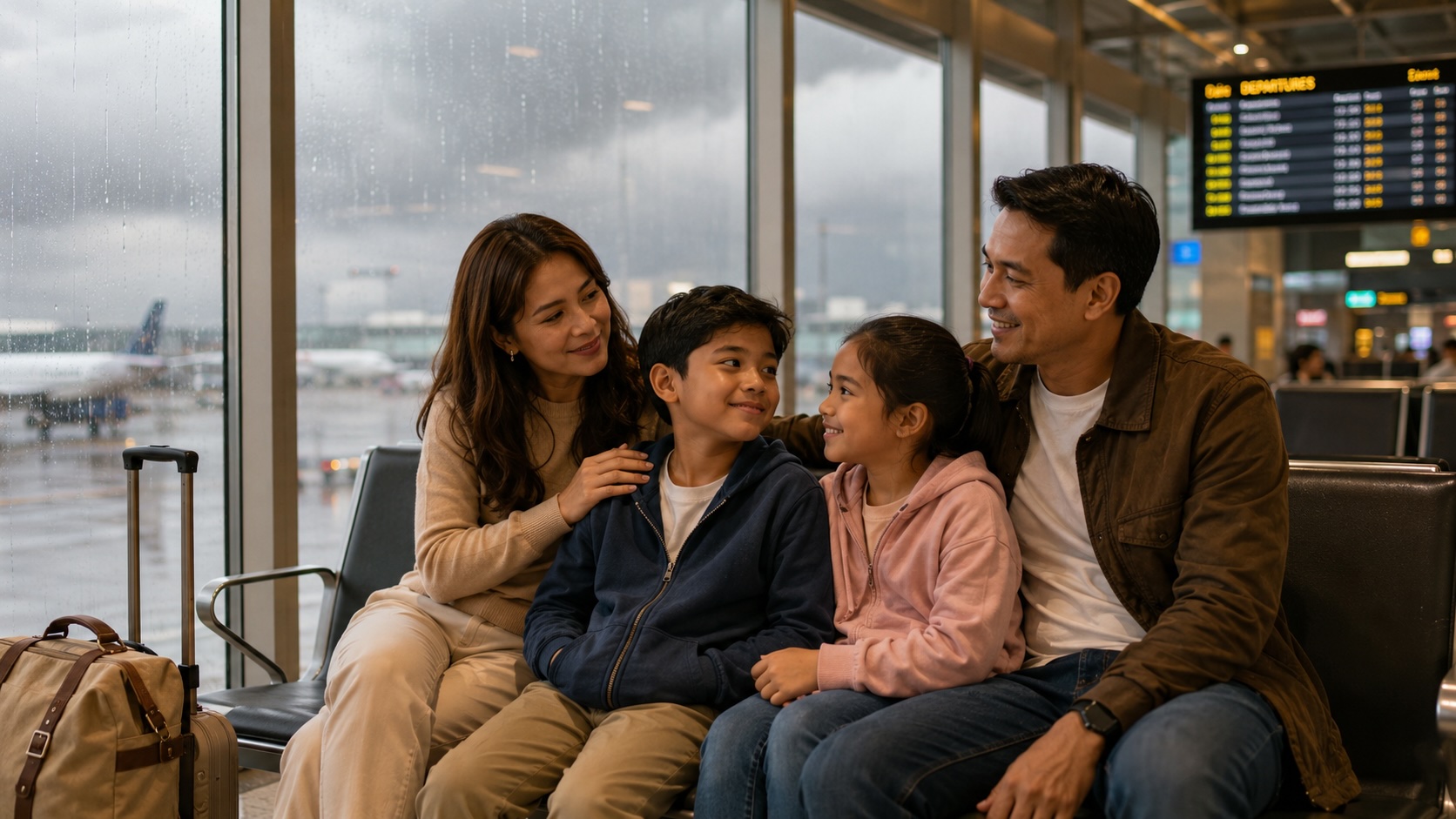
You built the Demera yourself this year. Somewhere in a DC parking lot, a church courtyard in Minneapolis, or a community hall in LA. You and your neighbors stacked the branches, tied on the Meskel flowers, and lit a fire big enough to feel like the real thing. It was beautiful. And still, some part of you was picturing a different fire: the one your family lights at home.
Meskel, the Ethiopian and Eritrean Orthodox festival marking the finding of the True Cross, lit each September in a bonfire called the Demera, carries a pull that goes beyond the ritual itself. This is about the decision so many Ethiopians and Eritreans abroad face every September: build it here again, or fly home and stand in the smoke where it actually started for your family. It’s the same pull that brings people home for Ghana’s Homowo festival or South Africa’s Heritage Day. Different fire, same reason to go.
Meskel is an Ethiopian and Eritrean Orthodox holiday celebrated on September 27 (September 26 in leap years). It commemorates the 4th-century discovery of the True Cross by Roman Empress Helena. Recognized as a UNESCO Intangible Cultural Heritage, it centers on massive communal bonfires called Demera, decorated with yellow daisies.
For the diaspora, it carries a pull that goes beyond the ritual itself. This is the decision so many Ethiopians and Eritreans abroad face every September: build the Demera here again, or fly home and stand in the smoke where it actually started for your family. It’s the same pull that brings people home for Ghana’s Homowo festival or South Africa’s Heritage Day. Different fire, same reason to go.
The Diaspora Demera Is Real: Not a Substitute
Let’s start by giving the diaspora celebration its due, because it deserves it.
In Washington, DC, home to the largest Ethiopian community outside Africa, Meskel gatherings draw crowds that rival small-city festivals. Minneapolis–Saint Paul, Dallas–Fort Worth, Seattle, Atlanta, Los Angeles, and New York all host their own Demera celebrations. Some are organized by churches; others by community associations that have done this for decades. Toronto and Calgary carry the tradition for Ethiopian and Eritrean communities in Canada.
These aren’t watered-down versions. People who grew up attending these gatherings describe them as some of the largest celebrations of their kind outside Ethiopia: genuinely large in scale, genuinely full of devotion. The priests still lead the prayers. The bonfire still burns. The community still gathers around it exactly the way it’s supposed to.
So if you’ve only ever celebrated Meskel abroad, you haven’t missed the point. You’ve been doing it right.
Here’s how the biggest diaspora hubs mark it, and what flying home from each city typically looks like:
| Diaspora Hub | Community Size | Typical Meskel Gathering | Flying Home for Meskel |
|---|---|---|---|
| Washington DC (incl. Virginia & Maryland) | Largest Ethiopian community outside Africa (200,000+) | Large church and community Demera events across the metro area | Multiple daily connections to Addis Ababa; the most common departure point for Meskel travel |
| Minneapolis–Saint Paul | Second-largest US Ethiopian community | Community-organized Demera with strong turnout | Connects through major hubs; popular gathering point before group departures |
| Los Angeles | Major Ethiopian and Eritrean population | Large-scale Demera, often paired with other Orthodox holiday traditions | West Coast travelers typically connect through the East Coast or Middle East hubs |
| Dallas–Fort Worth, Atlanta, Seattle, New York | Significant established communities | Local church and cultural association celebrations | Each connects to Addis Ababa via major US or international hub airports |
| Toronto & Calgary | Largest Ethiopian and Eritrean communities in Canada | Community Demera events, often multi-generational | Common gathering points before family members converge on flights to Addis Ababa |
If your family is scattered across a few of these cities, flying home for Meskel often means routing everyone through the same connection point, so the reunion starts in the air, not just on the ground in Addis.
Then Why Does the Pull Home Never Fully Go Away?
Because some things don’t travel, no matter how well a community rebuilds the ritual.
It’s not the fire itself. The diaspora Demera burns just as bright. It’s everything around it. The specific compound where your family has gathered for generations. The particular hills outside your parents’ home village, covered in wild Meskel daisies that nobody planted for the occasion. The neighbors who show up because they’ve shown up every year since before you were born. The smell of the season changing in Addis Ababa as the rains end and the flowers bloom on their own schedule, not a community calendar.
That’s the thing people describe again and again: standing in the crowd at Meskel Square or in a home village for the first time, your accent and your Americanness just stop mattering. Nobody’s checking where you grew up. You’re just another person there for the fire.
That’s the thing flying home gives you that no community hall can: not a better Meskel, but your Meskel, in the place it belongs to.
Deciding If This Is the Year
Not every year is the year you fly home, and that’s fine. The diaspora Demera exists precisely so the tradition survives the years you can’t make the trip.
But some years, the pull wins. When you haven’t visited in a long time. Or maybe a parent or grandparent isn’t getting younger, and the number of Meskels you’ll get to spend with them feels smaller than it used to. Perhaps your kids have never seen the real Meskel Square, or your family’s real village, and you want them to know it’s not just something you talk about: it’s a place, and it’s still there.
If this is the year, the decision tends to come together with the rest of the family: the aunts and cousins in Minneapolis, the sibling in Toronto, the parents who never left Addis. Meskel becomes the reason everyone converges on the same week, arriving from different diaspora hubs to stand in the same place at the same time. That coordination is half the joy of the trip before you’ve even landed. Once the dates are set, our guide to booking flights to Addis Ababa walks through exactly how early to lock in fares for this window.
Making the Trip Work
Once you’ve decided to go, timing matters. Meskel falls on September 27 (September 28 in leap years), and in 2026 that date lands on a Sunday. Because Meskel and the Ethiopian New Year, Enkutatash, sit in the same September window, this is one of the most concentrated diaspora travel periods of the year on flights to Addis Ababa. So, affordable flights get scarce. Fares climb as the date approaches.
We’ve already mapped out the full booking calendar for this route, including which US departure cities are cheapest and how far ahead to book, in our complete guide to flights to Addis Ababa from the US. If you’re planning this trip, that’s the place to work out your dates and fare.
What’s worth adding here is the family-coordination piece that a flight guide can’t cover. If your trip is really about converging with relatives from other diaspora hubs, loop in everyone’s travel plans early. A travel agent can help build connecting itineraries so cousins flying from Minneapolis and Dallas land in Addis around the same time as you. Sometimes even on the same incoming flight, so everyone arrives on the same schedule instead of missing the first days together.
What to Bring Home
Flying home for Meskel usually means flying home with a fuller suitcase than usual, and a bit of planning here goes a long way.
Clothing
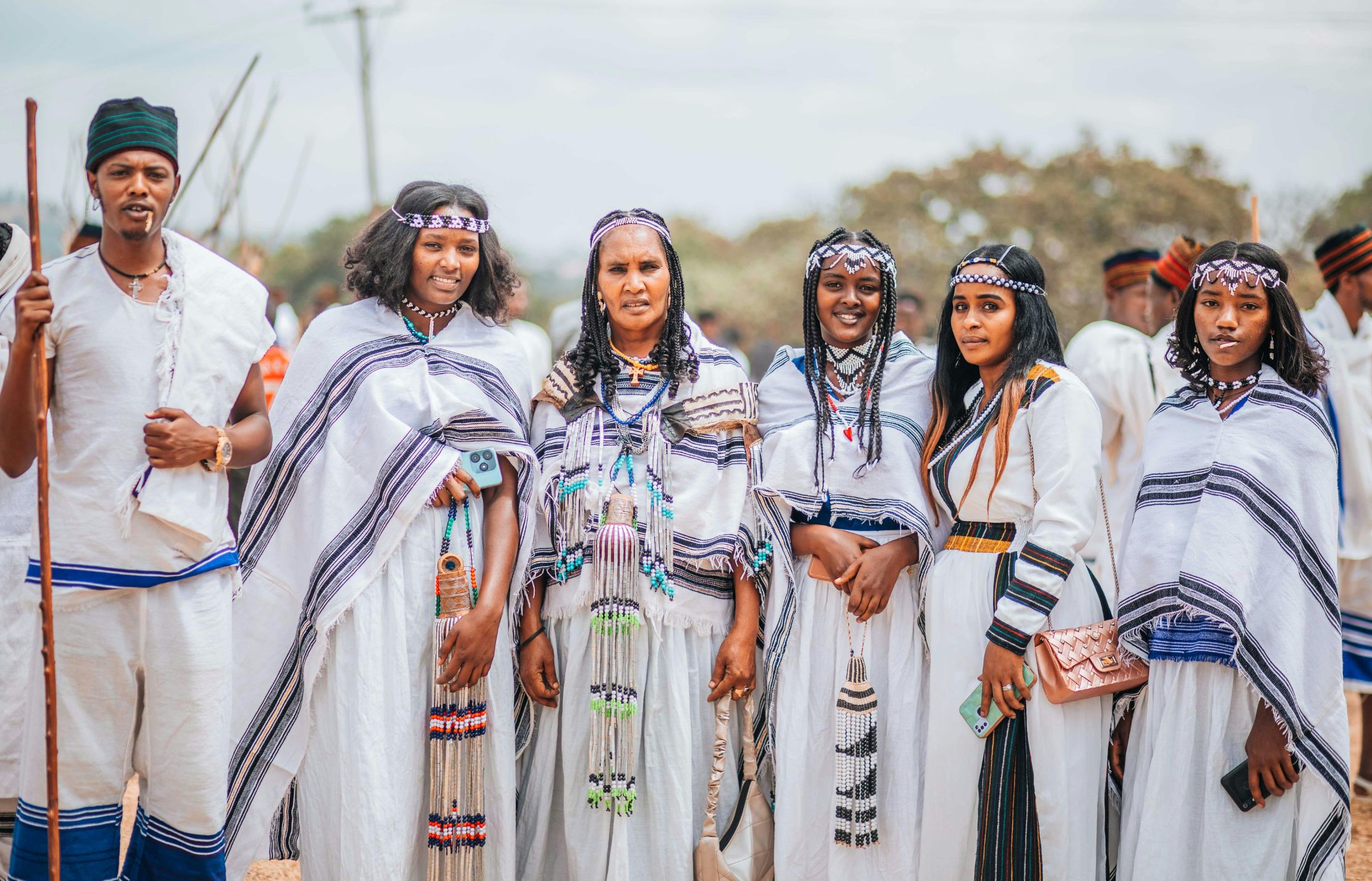
If you’ll be at the Demera itself, many people wear traditional white dress for the occasion: the habesha kemis for women, paired with a netela shawl, and a white shirt or traditional garment for men. If yours is packed away from the last trip, or your kids have never had one, this is worth sorting before you fly rather than searching for it in Addis on short notice.
Gifts
Meskel coincides with family reunions, so it’s common to travel with gifts for parents, grandparents, and extended family you haven’t seen in a while. Coffee ceremony sets, hard-to-find items, and small gifts for kids you’ll be meeting for the first time are common choices.
Baggage math
Between clothing, gifts, and anything you’re bringing back the other direction, checked bag weight adds up fast on this trip. The good news: most airlines flying US routes to Addis Ababa are generous here.
Ethiopian Airlines includes two free checked bags at 23 kg each in economy on flights between the US and Addis Ababa, and several partner carriers on this route offer similar allowances. Still, confirm the exact allowance for your specific airline and fare before you pack: a slightly cheaper fare on a different carrier can cost more once you add a second bag.
If This Isn’t Your Year
Not everyone can make this trip every September, and that’s fine. The diaspora Demera exists precisely so the tradition survives the years the flight isn’t possible: a new baby, a job that can’t spare the time, a fare that doesn’t work this year.
If you’re staying put this Meskel, that doesn’t mean staying disconnected. A video call with family during the bonfire, a gift sent ahead through a relative who is traveling, or simply telling your kids the story of your own family’s Demera while you build one abroad. All of it keeps the thread alive until the year you can go.
And if this year isn’t the year, next September still will be. Families who make this trip regularly say planning starts early, deciding months ahead, coordinating with relatives, and watching for the right fare. There’s nothing wrong with starting that thinking now, even for a Meskel that’s still a year away.
Bringing It Back With You
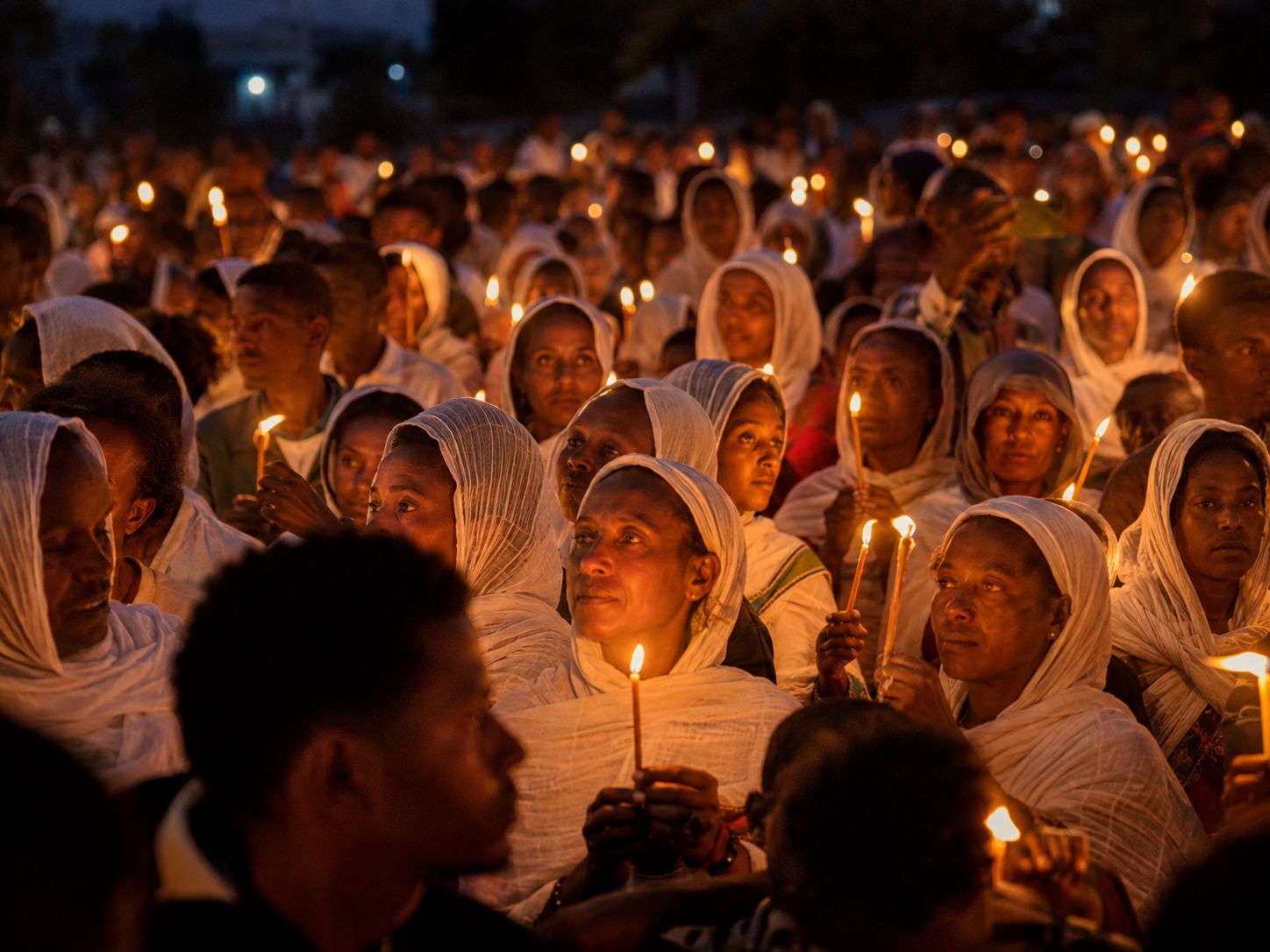
Whether you go this year or build the Demera at home again, the two versions of Meskel aren’t in competition. The diaspora celebration keeps the tradition alive where your community lives now. The trip home connects it back to the ground it grew from. Most people who fly home for Meskel don’t come back and stop celebrating it abroad: they come back and celebrate it abroad with more of themselves in it.
If this is your year to go, ASAP Tickets agents book flights to Addis Ababa every day and understand exactly how tight this travel window gets. Call (844) 300-7983 and tell us your dates and who you’re trying to meet there, and we’ll help the whole family land together.
Frequently Asked Questions About Flying Home for Meskel
When does Meskel fall in 2026?
Meskel is observed on September 27 (September 28 in leap years). In 2026, that date falls on a Sunday.
Is it better to celebrate Meskel in the diaspora or fly home?
Neither replaces the other. Diaspora Demera celebrations in cities like Washington, DC, Minneapolis–Saint Paul, and Los Angeles are genuine, large-scale continuations of the tradition. Flying home connects the celebration to a specific place and family history. Many people do both across different years.
Why is Washington, DC, significant for Ethiopian Meskel celebrations?
The Washington, DC metro area, including its Virginia and Maryland suburbs, is home to the largest Ethiopian community outside of Africa, with estimates placing the population at over 200,000. Its Meskel celebrations reflect that scale.
How far in advance should I book flights to Addis Ababa for Meskel?
Because Meskel and Enkutatash fall in the same September window, this is one of the busiest diaspora travel periods of the year on this route. Our full guide to flights to Addis Ababa covers the specific booking timeline and cheapest departure cities in detail.
Can I coordinate travel with family flying from other cities?
Yes. If relatives are flying in from multiple diaspora hubs to meet in Addis Ababa, a travel agent can help build connecting itineraries so everyone arrives around the same time, rather than each person booking separately and missing the first days together.
Further Reading

Get it right to your inbox by subscribing to ASAP Tickets weekly emails featuring the hottest flight deals from US to the .
Massive savings • Unsubscribe at any time.
You were sucessfully subscribed
Please check your inbox to confirm the subscription