

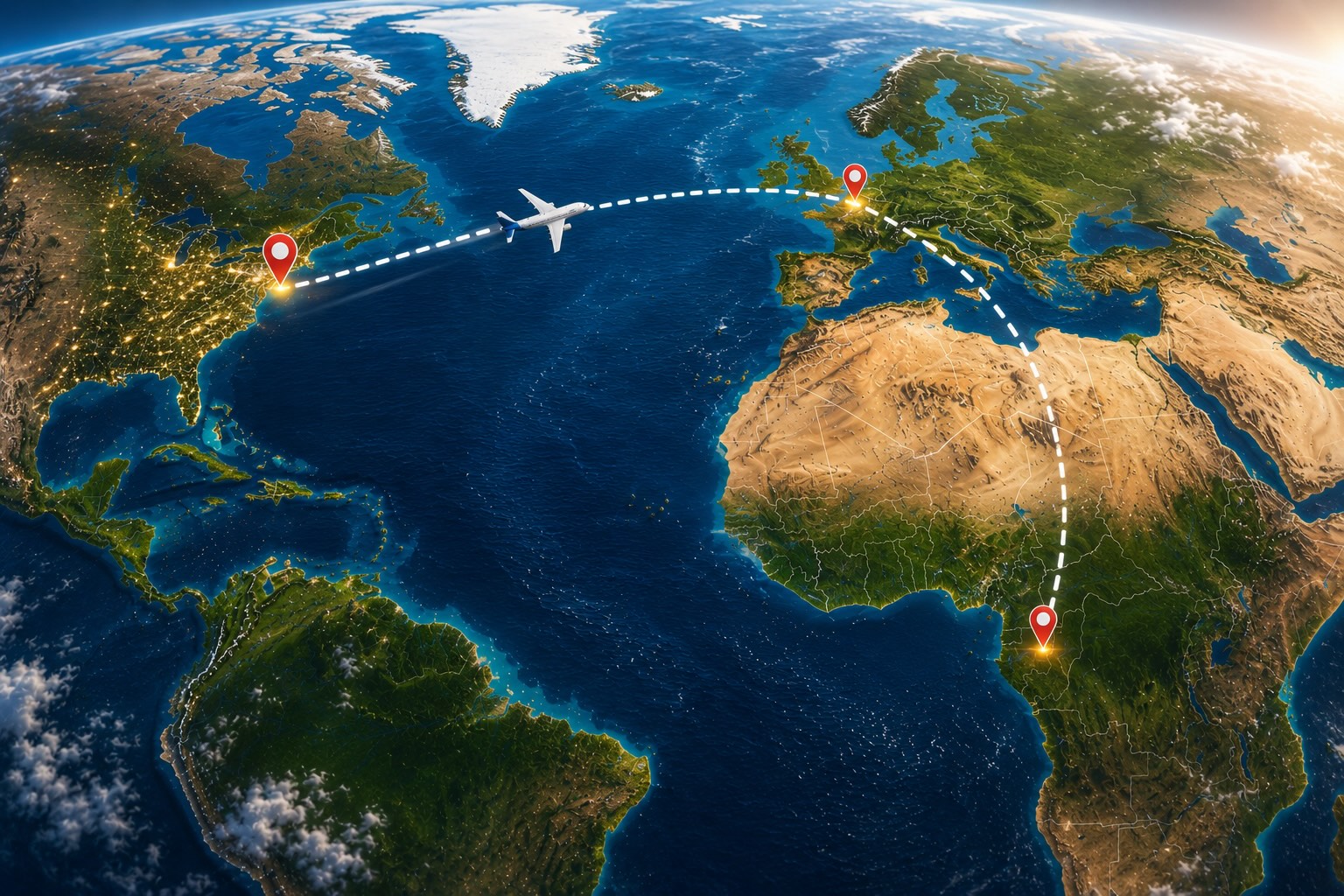
You know the feeling the moment it hits. It’s somewhere over the Pacific — maybe you’ve just crossed the international date line, the cabin lights have gone dim, and you realize: this Philippines trip is different from every other flight you’ve ever taken. You’re not going on vacation. You’re going home.
Whether you haven’t been back in two years or twenty, whether you were born there or grew up here in the States hearing stories about a place you’ve never fully seen, the trip to the Philippines carries weight that no travel itinerary can capture. This guide isn’t for tourists deciding whether to visit. It’s for Filipino Americans going to see lola, to bring pasalubong, to sit in the heat of the probinsya with relatives they’ve missed, and to feel (at least for a few weeks) like every part of them belongs somewhere.
Here’s everything you actually need to know before you go.
1. Choosing Your Flight: What Matters for Fil-Ams
Most planning for trips to the Philippines starts with the wrong question: “Which airline is cheapest?” The better question is: “Which combination of route, layover, and baggage policy works for what I’m actually doing?” For a Fil-Am going home, often with extra bags, possibly with elderly parents, almost certainly going beyond Manila, this distinction matters a lot.
US gateways with the strongest Philippines connections
Los Angeles (LAX) and San Francisco (SFO) have the most options from the West Coast, with Philippine Airlines, Korean Air, EVA Air, and Cathay Pacific all competing on Pacific routes. From the East Coast, JFK and Newark are served by Korean Air (Incheon) and Cathay Pacific (Hong Kong). Chicago (ORD) and Dallas (DFW) also connect via Asian hubs, though options are thinner and prices are often higher.
Best layover cities for this route
- Seoul (ICN) — Korean Air, Asiana: Excellent airport, generous baggage policies, smooth connections to MNL, CEB, and DVO. A top choice for most Fil-Ams.
- Taipei (TPE) — EVA Air, China Airlines: Competitive fares, good service, connects to multiple Philippine airports.
- Tokyo (NRT/HND) — Japan Airlines, ANA: Premium experience, reliable schedules — pricier but worth it for longer trips.
- Doha (DOH) — Qatar Airways: Often cheapest from the US East Coast; long layover but excellent lounge access.
- Singapore (SIN) — Singapore Airlines: World-class airport; the premium choice for a seamless experience.
Pro tip: The fares you see online are never the whole picture. Airlines offer private, unpublished fares (called consolidator fares) that aren’t listed on any booking site. These are especially common on US-Manila and US-Cebu routes. ASAP Tickets agents have access to these fares and can often find significantly lower prices than anything you’ll find on your own — particularly useful when booking multiple seats for a family trip to the Philippines.
2. The Balikbayan Box vs. Checked Luggage Question
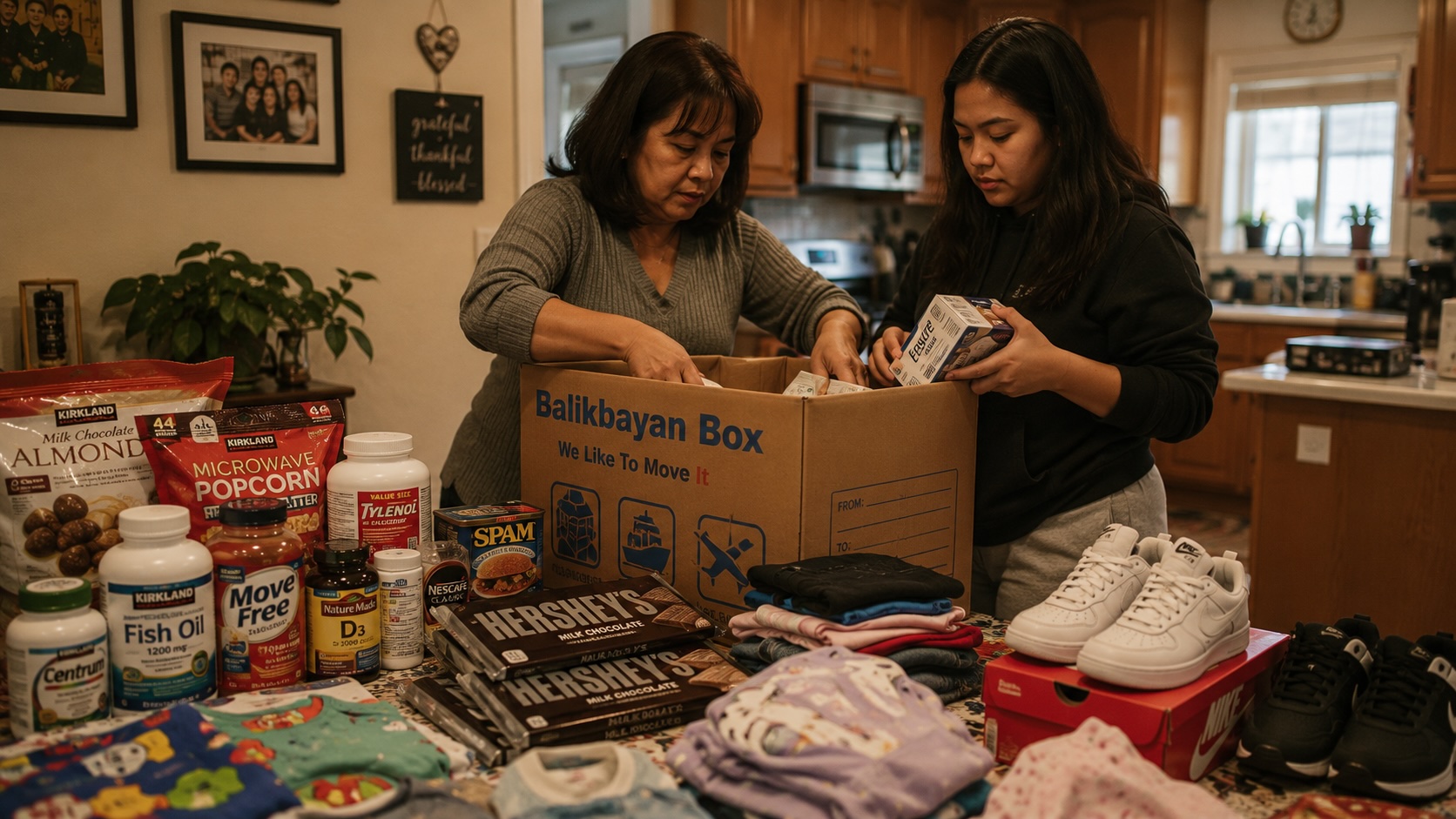
Every Fil-Am household has this argument before a trip to the Philippines. The balikbayan box is both a practical tool and a cultural institution: part logistics, part love letter. The comedian Rex Navarrete put it best: “One thing you should never pack in a balikbayan box is air.” Every cubic inch is accounted for.
Shipping a balikbayan box separately
Best for bulky items (appliances, large clothing hauls, canned goods), trips longer than three weeks, or when you need to send things ahead. Shipping a standard-size balikbayan box from the US typically costs $150–$280 and takes 30–60 days by sea freight. You might not get it when you land, but the family will eventually get it.
Checking extra bags on the flight
Best for items you need to hand-deliver or gifts that need to arrive with you. Baggage allowances by airline on US-Philippines routes:
- Philippine Airlines: 2 bags × 23kg
- Korean Air: 2 bags × 23kg, extra bag ~$50–$100
- EVA Air: 2 bags × 23kg, extra bag ~$75
- Qatar Airways: 1 bag × 30kg, extra bag ~$60
- Cathay Pacific: 2 bags × 23kg, extra bag ~$80–$120
Watch out: A third checked bag may cost $150–$200 each way. If you’re planning to bring that much, it’s almost always cheaper to ship a box separately than to pay airline overage fees.
3. Arriving at NAIA: What They Don’t Put in the Guidebooks
No amount of reading fully prepares you for Ninoy Aquino International Airport. It is loud, warm, fast-moving, and (once you’ve been through it a few times) deeply familiar in the way only home can be.
Which terminal are you arriving at?
NAIA has four terminals. Terminal 1 is older and serves most international carriers, including Cathay Pacific, Korean Air, EVA Air, and Qatar Airways. Terminal 3 is newer and more manageable: Philippine Airlines uses it. Know before you land. The terminals are not connected inside, and getting between them requires a shuttle or taxi.
The balikbayan privilege at immigration
If you hold dual Filipino-American citizenship or are a former Filipino citizen with a US passport, you qualify for the balikbayan privilege — a visa-free stay of up to 1 year. You’ll also be able to use the dedicated balikbayan lane at immigration, which moves faster. Have your dual citizenship documents ready. Family members traveling with you may also qualify if accompanying you.
What to have ready at NAIA immigration:
- Passport (US and Philippine if dual citizen)
- eTravel QR code — register free at etravel.gov.ph at least 72 hours before arrival
- Balikbayan documents if claiming the privilege
- Return or onward ticket (balikbayan holders are exempt from this requirement)
Customs
You may be selected for an X-ray of your bags. This is standard, not singling you out. Duty-free allowances cover ₱10,000 worth of goods (roughly $170). For most balikbayan travelers bringing pasalubong and personal items, customs agents usually use discretion, but don’t bring commercial quantities of anything and don’t pack prohibited items (fresh meat, certain produce, firearms).
Finding your family at arrivals
There is nothing quite like walking out of NAIA arrivals and finding your family. It’s chaotic, it’s loud, and someone will almost certainly be holding a handwritten sign even though everyone has a cellphone. Give your family your flight number and terminal ahead of time. Designate one person to be the caller: the crowd outside arrivals is thick, and cell signal can be spotty right at the exit.
4. Getting to the Probinsya
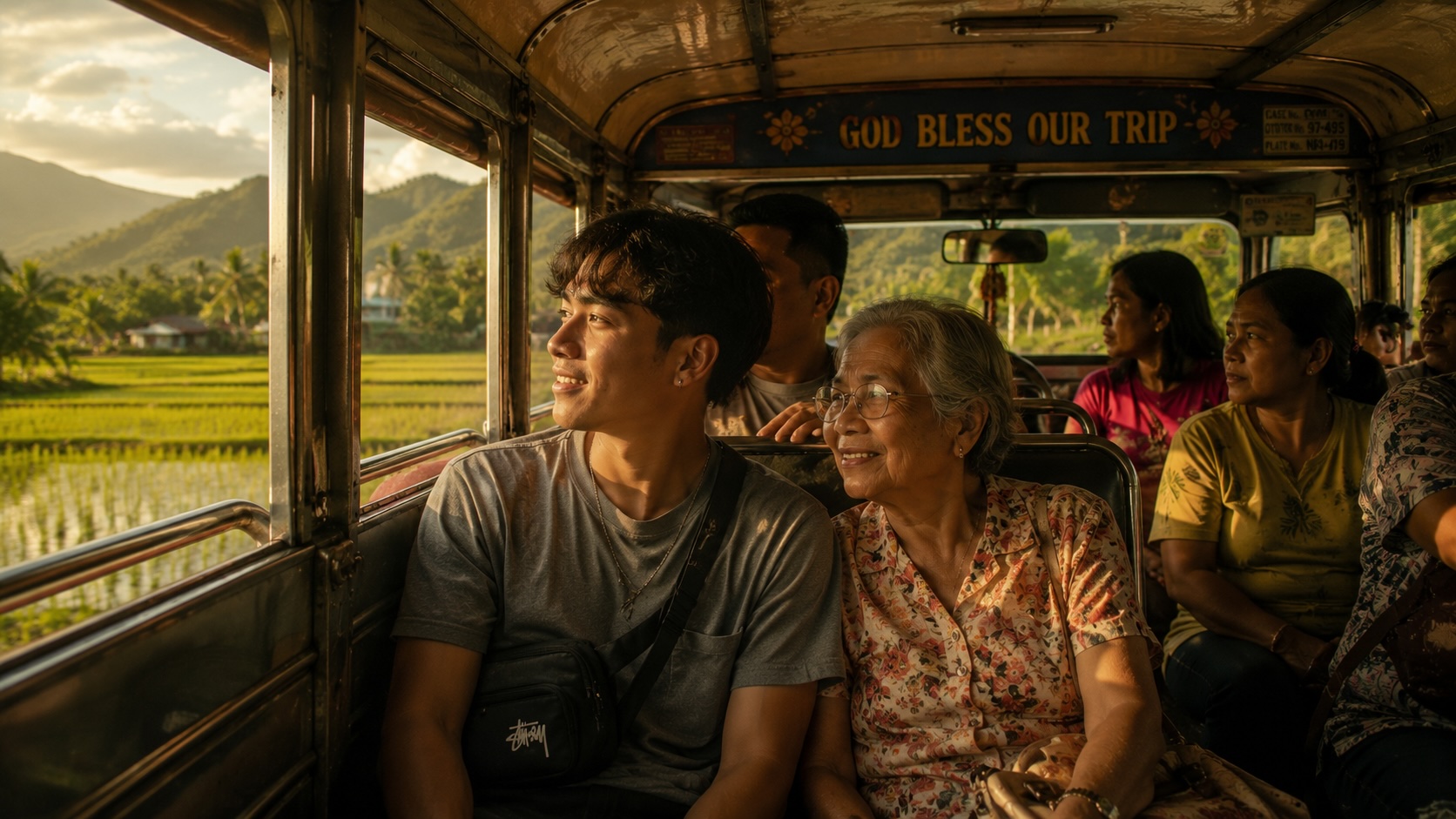
Most Fil-Ams aren’t going to Manila for Manila. They’re going through Manila to travel somewhere else: Cebu, Iloilo, Pampanga, Bicol, Pangasinan, Davao, Ilocos Norte, or a hundred other provinces where their family actually lives. This is the part of the trip to the Philippines most travel guides skip entirely.
Domestic flights: book before you leave the US
Cebu Pacific, Philippine Airlines (PAL Express), and AirAsia Philippines are the three main domestic carriers. Book your domestic connections before you leave the US. Not at NAIA. Prices are significantly lower when booked in advance, and seats fill quickly around the holiday season. Allow at least 3–4 hours between your international arrival and domestic departure. NAIA connections are not seamless.
For provinces close to Manila, the bus is underrated
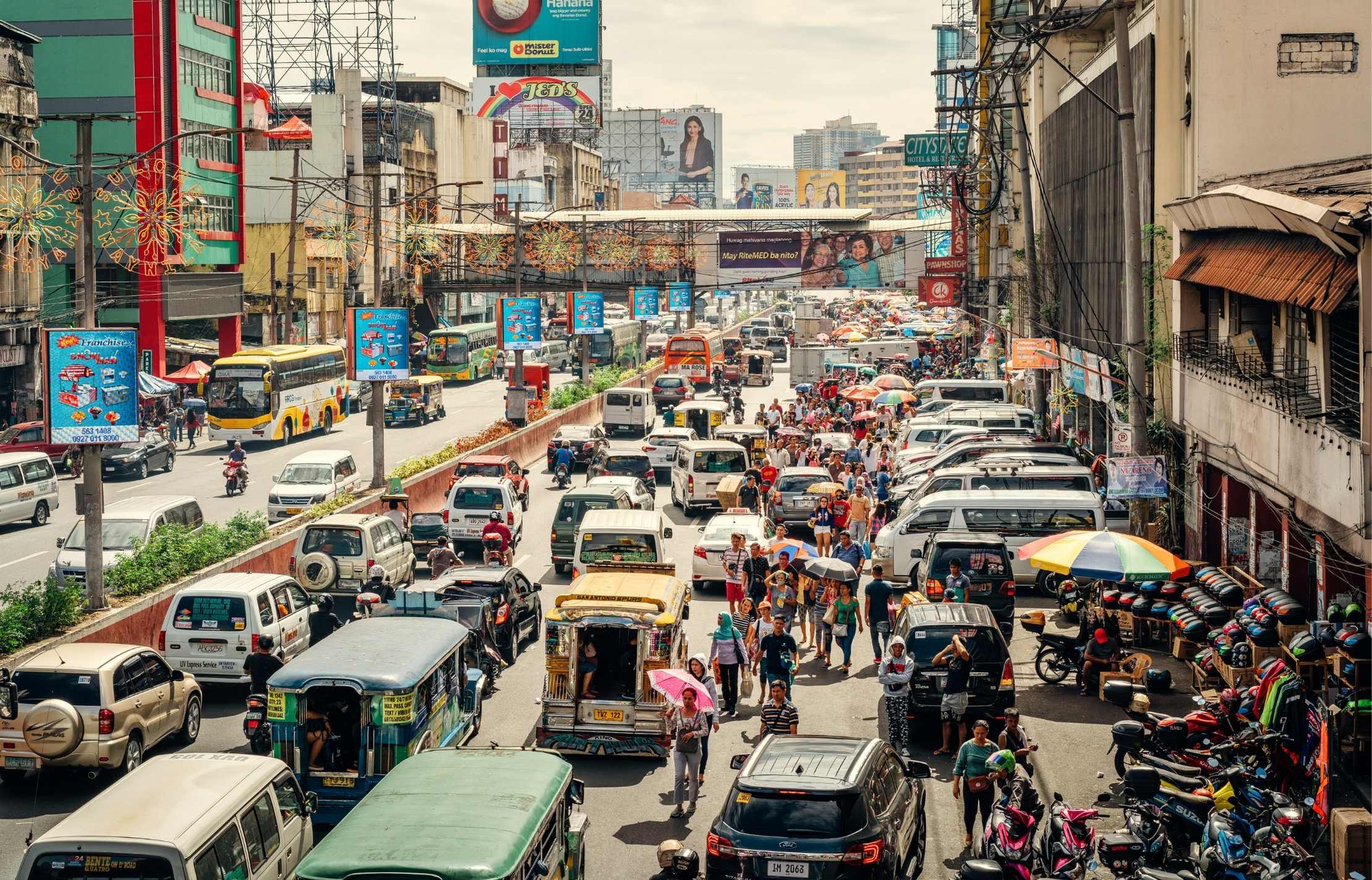
If your family is in Pampanga, Tarlac, Batangas, Laguna, or parts of Quezon province, taking a bus or private van is often faster than flying once you factor in airport time. Buses from Cubao, Sampaloc, and Pasay go to most major provincial cities. Hiring a private driver for ₱2,000–₱4,000 (~$35–$70) is comfortable and direct.
First-timer tip: Don’t try to make it to the province on the same day you arrive internationally. Manila’s traffic is real, you’ll be tired, and arriving in the probinsya after midnight when everyone’s been waiting is nobody’s ideal reunion. Spend one night near the airport, rest, and travel the next morning.
5. Pasalubong: The Pressure, the Planning, the Strategy
Let’s be honest about what pasalubong actually is: it’s love expressed through stuff, and the pressure around it is real. Forget someone (even someone you forgot would be there), and you’ll know it. Bring the wrong thing, and you might hear about it for years. But get it right, and your pasalubong will be talked about for the rest of the visit.
What travels well from the US
- Vitamins and supplements: American brands are trusted and expensive in the Philippines
- Makeup and skincare: drugstore brands like CeraVe, Neutrogena, L’Oréal, and Maybelline are prized
- Chocolate: Hershey’s, Reese’s, M&Ms — familiar US brands feel special
- Nuts and dried fruit: products from Costco or Trader Joe’s are easy to pack and are appreciated
- Kids’ clothing: clothes from the Gap, Old Navy, or Carter’s are popular and pack light
- Levi’s, Nike, and other athletic wear: American brands carry real value and aren’t easy to find at the same price
What to skip and buy in Manila instead
- Fresh food or anything perishable — customs won’t thank you
- Filipino food items available locally — they’ll be fresher and cheaper there
- Heavy or bulky items when you’re already at your baggage limit
- Pasalubong for distant relatives you’re not certain are coming — buy at Duty Free Philippines or S&R once you land
The budget reality
For a family trip to the Philippines with multiple relatives, ₱15,000–₱30,000 (roughly $250–$500) for pasalubong is a reasonable baseline. Plan this into your trip budget alongside flights and accommodation. It’s not optional, and pretending it is will only add stress. As an option, Duty Free Philippines at NAIA lets you top up right after you land, so you can travel lighter and shop when you arrive.
6. For the Second-Gen: Going for the First Time (or the First Time as an Adult)
If you grew up Filipino American, raised on rice, TFC reruns, and your parents’ stories, but you’ve never actually been to the Philippines, or you went as a toddler and barely remember it, this section is for you.
The feeling is specific and hard to explain: you’re going to a place that belongs to you, that lives inside you through food and language and family, but that you’ve never actually stood in. There’s excitement, and there’s anxiety, and there’s something that feels almost like guilt for not having been before. All of that is completely normal.
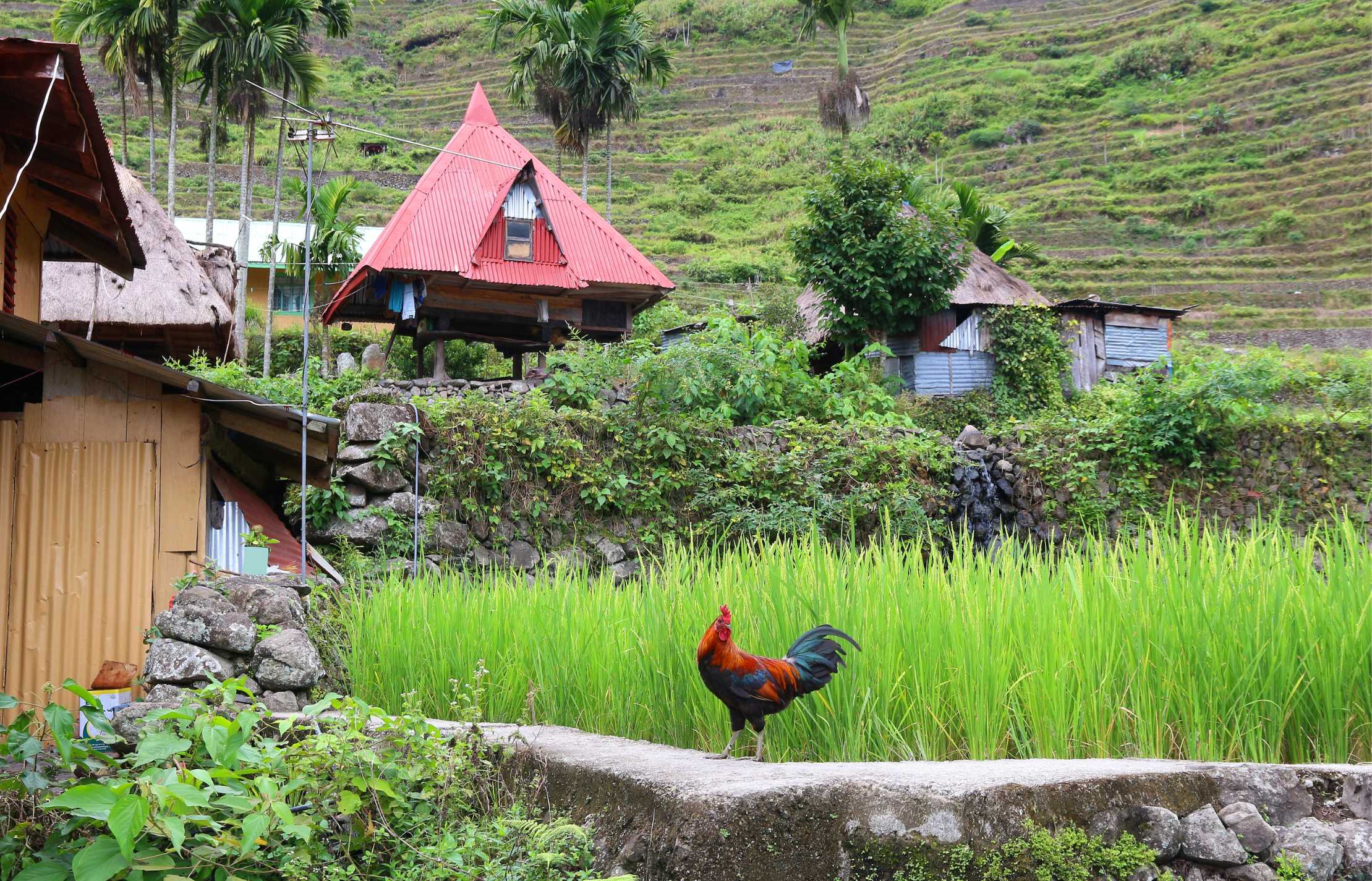
You might feel like an outsider at first. That’s okay. Especially in Manila, you may stand out as someone raised in America (the way you dress, how you move, maybe how you speak). In the probinsya, this is almost always met with warmth and curiosity rather than judgment. Relatives will be genuinely excited to get to know you. Let them lead. Ask questions even when you feel like you should already know the answers. Nobody expects you to be from there. They just want you to show up.
On the language gap
If you don’t speak Tagalog, or speak it badly, or only understand the version your parents speak at home, don’t let that stop you. The Philippines has one of the highest English proficiency rates in Asia. Learning even a handful of phrases (salamat, kumain ka na ba, kamusta) will be received with delight, not judgment.
The identity piece
Something the Philippines’ tourism campaigns don’t tell you: many second-gen Fil-Ams come back from their first real trip to the Philippines changed. A face you’ve only seen in a photograph suddenly makes sense. A recipe your grandmother made is the food at every table. Something that felt abstract (“being Filipino”) becomes concrete, physical, and yours. It’s worth going for that alone.
7. Making the Trip Count: Timing and How Long to Stay
When to go
Christmas (mid-December–early January) is the most emotionally significant time for a trip to the Philippines — and the most expensive. Flights from the US can run 40–60% higher than in the shoulder season. Book five to six months ahead, minimum.
Holy Week (March–April) is the other major peak — domestic travel within the Philippines gets extremely crowded. Fly into Manila before Holy Week begins if you can.
Best value windows: February–early March, late June–July, and September–October. These are when you’ll find the most competitive fares and the least crowded provincial experience.
How long to stay
Two weeks is the minimum for a trip to the Philippines to feel like anything other than a sprint. You’ll spend the first two or three days recovering from travel and greeting everyone. You need at least a week in the province to feel present rather than just visiting. Three weeks is the sweet spot — long enough to settle in, short enough to manage with most US employers.
Book smart: The Philippines trip is one of the routes where how you book matters as much as when. Agents who know this route, and have access to consolidator fares that don’t appear on Expedia or Google Flights, can save families of 3–4 people several hundred dollars over the published fare. Call ASAP Tickets at 844-300-7983 and tell them your dates and home province. They’ll find what the booking sites won’t show you.
Philippines Trip Checklist
Before you fly:
- Book flights 4–6 months ahead for Christmas; 6–8 weeks ahead for shoulder season
- Register on etravel.gov.ph at least 72 hours before departure (free, required)
- Book domestic connections before leaving the US
- Check your balikbayan privilege eligibility if you’re a dual citizen or a former Filipino citizen
- Ship balikbayan box if sending by sea — allow 30–60 days for delivery
- Buy travel insurance, especially for longer trips or typhoon-season travel
- Notify your US bank of travel dates to avoid card blocks
- Download GCash or have pesos ready — many provinces are still cash-heavy
Pasalubong prep:
- Make your list: who is definitely coming, who might come, who you’ll visit
- Budget ₱15,000–₱30,000 and factor it into your trip cost
- Pack pasalubong in a dedicated bag so you don’t have to unpack everything at customs
- Leave room to top up at Duty Free Philippines at NAIA after you land
At NAIA:
- Know your terminal: T1 for most international carriers, T3 for Philippine Airlines
- Have your eTravel QR code ready on your phone
- Allow 3–4 hours minimum between international arrival and domestic departure
- Give your family your flight number, terminal, and estimated arrival time before you land
Trip to the Philippines: Frequently Asked Questions
How far in advance should I book a trip to the Philippines from the US?
For Christmas and New Year: a minimum of 5–6 months. For other times of year, 6–10 weeks ahead typically gets competitive fares — though consolidator fares through a travel agent can sometimes be found closer to departure.
Do Filipino Americans need a visa to enter the Philippines?
US citizens get a 30-day visa-free stay. Dual citizens and former Filipino citizens qualify for the balikbayan privilege — up to one year visa-free. Have your dual citizenship documents ready at immigration.
Is it better to ship a balikbayan box or bring extra luggage?
Bulky or heavy items are almost always cheaper by sea freight. Items you need to hand-deliver should go in checked luggage. Many Fil-Ams do both — ship a box ahead and bring carry-on pasalubong on the flight.
What’s the best airport to fly into for a family trip to the Philippines?
Manila (NAIA) has the most international connections. If your family is in the Visayas or Mindanao, flying directly into Cebu (CEB) or Davao (DVO) saves you a domestic connection. Clark (CRK) works well for Pampanga and Northern Luzon.
How long should a Philippines trip be?
Two weeks minimum to feel like you actually arrived. Three weeks is the sweet spot. Dual citizens with balikbayan status can stay visa-free for up to 1 year.
What if I’ve never been and I’m nervous about going?
Go anyway. Go with family the first time if you can. Filipinos are extraordinarily welcoming to Fil-Ams, the Philippines is very navigable even for first-timers, and the experience of going for the first time is unlike any other trip you’ll take.
Get it right to your inbox by subscribing to ASAP Tickets weekly emails featuring the hottest flight deals from US to the .
Massive savings • Unsubscribe at any time.
You were sucessfully subscribed
Please check your inbox to confirm the subscription