


Planning flights to India for a wedding, a family milestone, or a visit home? You already know the challenge: US-to-India is one of the most competitive long-haul routes in the world. Fares change quickly, so the wrong booking decision can cost you hundreds of dollars. Our guide covers everything you need: top airlines, the best booking windows by season, how routing choices affect your price, and the practical details that most travelers only learn after they’ve already overpaid.
When Do Most Indian-Americans Fly Home to India?
Understanding the demand calendar is the first step to finding a better fare. US-to-India travel peaks in three distinct windows, each driven by a different type of trip.
Wedding Season: October to February
Indian wedding season runs primarily from October through February, with the heaviest concentration between November and January. This is when flights to India for a wedding are most in demand, and most expensive.
Diwali (typically October or November) marks the start of the festive-wedding cycle, and fares spike sharply from late September onward. Christmas and New Year overlap with peak wedding travel, compounding demand. If your wedding travel falls in this window, book 4–6 months in advance. Waiting until 6–8 weeks out during peak season almost always means paying premium prices or finding limited availability on preferred routes.
Summer Travel: June to August
Summer is the second busiest period, driven by school holidays in the US and Canada rather than Indian weather (which is monsoon season). NRIs with children take their annual home visits during this window, and some wedding traditions favor early summer dates. Fares run high from mid-June through late July. August is the sweet spot in the summer: demand drops as US school calendars restart, and fares for late August departures can be $150–$300 per ticket less than peak July pricing.
Shoulder Season: March to May and September
These are the cheapest windows on the US-to-India corridor. March through May (before Indian summer heat peaks) and September (after the monsoon, before Diwali) consistently produce the lowest fares. If your family visit or smaller ceremony is flexible on timing, these months offer the best combination of price and manageable travel conditions. September, in particular, is historically the cheapest month for US-India and Canada-India flights.

Best Airlines for Flights to India for a Wedding or Family Visit
The airline you choose affects not just price but routing, baggage allowance, and schedule reliability. All these factors make a difference when you’re traveling for a fixed-date event like a wedding.
Nonstop: Air India, United Airlines, and Air Canada
If you want to eliminate connection risk entirely, which is critical when missing a wedding is not an option, nonstop is your safest choice.
Air India operates nonstop flights from:
- New York (JFK and EWR) → Delhi (DEL)
- New York (JFK and EWR) → Mumbai (BOM)
- Chicago (ORD) → Delhi
- San Francisco (SFO) → Delhi and Mumbai
United Airlines operates nonstop from:
- Newark (EWR) → Delhi (DEL)
- Newark (EWR) → Mumbai (BOM)
Air Canada operates nonstop from:
- Toronto (YYZ) → Delhi (DEL)
- Toronto (YYZ) → Mumbai (BOM)
Air Canada is the natural nonstop choice for Indian-Canadian travelers flying home for a wedding or family milestone. For US-based travelers in border cities (Detroit, Buffalo, Seattle, or the Northeast), getting to Toronto Pearson and taking the Air Canada nonstop can be a competitive alternative to connecting through a European hub, and is worth pricing before assuming a US departure is cheaper.
Nonstop flights run 14–16 hours from the East Coast and Toronto. They use polar or North Atlantic routing and are completely unaffected by any Middle Eastern airspace considerations. As expected, nonstop fares run higher than connecting options, but for wedding travel where missing a connection could mean missing the ceremony, the premium is often worth it.
Via Europe: Best Connecting Option for Most US and Canadian Travelers
European connections via Frankfurt, London, Zurich, or Paris are the most reliable one-stop option from the US to India (and Canada to India), with no routing concerns and strong schedule integrity.
- Lufthansa (via Frankfurt or Munich) — serves Delhi, Mumbai, Chennai, Hyderabad, and Bengaluru. Connects from New York, Chicago, Los Angeles, and Washington DC.
- British Airways (via London Heathrow) — strong frequencies to all major Indian metros. Connects from most US cities via oneworld partner American Airlines.
- SWISS Air (via Zurich) — connects Delhi and Mumbai to 8 major US gateways including JFK, SFO, Boston, Chicago, and Washington DC.
- Air France (via Paris CDG) — serves New York, Atlanta, Chicago, and Raleigh-Durham with connections to major Indian metros.
European routing adds roughly 2–4 hours to total journey time but offers excellent schedule reliability and generous baggage policies — important when traveling with gifts and formal wear for wedding events.
Via Asia: Best for West Coast Travelers
If you’re flying from California, Seattle, or the Pacific Northwest, routing through Asia is often more efficient than going via Europe.
- Singapore Airlines (via Singapore SIN) — from SFO, LAX, and JFK to Hyderabad, Bengaluru, Chennai, and Delhi. Consistently rated among the best economy experiences on long-haul routes.
- Cathay Pacific (via Hong Kong HKG) — strong West Coast and New York connectivity.
- Japan Airlines / ANA (via Tokyo NRT/HND) — good option for West Coast travelers heading to Mumbai, Delhi, and Bengaluru.
Gulf Airlines: Emirates, Etihad, Qatar Airways
Emirates (via Dubai), Etihad (via Abu Dhabi), and Qatar Airways (via Doha) have historically been among the most popular choices for US-India travel, offering competitive fares and extensive coverage of Indian cities. They remain strong options during normal operating conditions. If you’re booking through Gulf hubs, use flexible or refundable fares and allow ample connection time. Turkish Airlines via Istanbul is another solid alternative that avoids Gulf airspace entirely while offering competitive pricing.
Flights to India: Airline Comparison
| Airline | Hub | Best For | Nonstop Available | Free Checked Bags |
|---|---|---|---|---|
| Air India | Direct | US & Canada East Coast and Midwest travelers | Yes — JFK, EWR, ORD, SFO, YYZ | 2 bags (Classic/Flex fares) or 1 bag (Value fare) |
| United Airlines | Direct | Northeast US travelers | Yes — EWR only | 1 free bag (Standard Economy); $90 for 1st bag (Basic Economy) |
| Air Canada | Direct | Canadian travelers | Yes — YYZ only | 1 bag (Standard/Flex/Comfort) or 2 bags (Latitude fare) |
| Lufthansa | Frankfurt (FRA) | US & Canada, avoids Gulf routing | No | 1 (23kg) |
| British Airways | London (LHR) | Wide US city coverage via American | No | 1 (23kg) |
| SWISS Air | Zurich (ZRH) | East Coast & Midwest US | No | 1 (23kg) |
| Air France | Paris (CDG) | Northeast & Southeast US | No | 1 (23kg) |
| Singapore Airlines | Singapore (SIN) | West Coast travelers | No | 1 (23kg) |
| Cathay Pacific | Hong Kong (HKG) | West Coast travelers | No | 1 (23kg) |
| Japan Airlines / ANA | Tokyo (NRT/HND) | West Coast travelers | No | 1 (23kg) |
| Emirates | Dubai (DXB) | Wide coverage, book flexible fares | No | 1 (23kg) |
| Qatar Airways | Doha (DOH) | Wide coverage, book flexible fares | No | 1 (23kg) |
| Turkish Airlines | Istanbul (IST) | Wide US coverage, competitive pricing | No | 1 (23kg) |
Booking Windows: When to Book Flights to India for a Wedding
The single most impactful decision on US-India/Canada-India fares is how far in advance you book. Here is the practical guidance by travel period:
- Peak season (Nov–Jan, June–July): Book 4–6 months in advance. These windows sell out on preferred routes, and nonstop options fill fastest. Waiting until 6–8 weeks out almost always means limited choice and higher prices.
- Shoulder season (March–May, September): 6–10 weeks in advance is often sufficient and can yield the best fares on the corridor. September is particularly cheap on most US-India routes (and Canada-India routes).
- August: Mid-August departures (after the 15th) benefit from dropping demand as US schools resume. Book 8–10 weeks ahead to capture this dip.
- Diwali window: Fares start rising in September for October/November travel. If your wedding travel coincides with Diwali, treat it like peak season and book early.
Best days to fly: Tuesday, Wednesday, and Thursday departures are consistently cheaper than Friday and Saturday. On a $800+ ticket, the day-of-week difference can be $100–$200 per person.

What to Budget Beyond the Ticket
Flying to India for a wedding involves costs beyond just the airfare. A realistic budget should account for:
Baggage: Most US-India flights on major carriers allow 2 checked bags of up to 23kg each in economy. Air India and European carriers are generally generous with baggage allowances, but confirm before booking, especially if you’re carrying wedding gifts, formal wear, or extra luggage for an extended stay.
Cash and gifts: If you’re carrying cash, the US requires you to declare amounts over $10,000 when entering or leaving the country. See our full guide on US cash declaration rules for details on what applies to travelers carrying money for family.
Multiple passengers: Wedding travel often means booking for couples or small family groups. Consolidator fares, which ASAP Tickets specializes in, can be significantly cheaper per person than published online rates, and the savings multiply across a group booking.
Practical Tips for Booking Economy Flights to India
Call for unpublished rates. US-India is one of the routes where consolidator fares can be 15–40% cheaper than what appears on Google Flights. These bulk fares are negotiated directly with airlines and are only available by phone. ASAP Tickets specializes in exactly this: our agents work the US-India/Canada-India corridor daily.
Book nonstop for fixed-date events. If you’re flying to India for a wedding with a specific ceremony date, the risk of a missed connection is real. A $150–$200 premium for nonstop is cheap insurance against missing the event entirely.
Consider open-jaw itineraries. If you’re attending events in multiple cities, for example, arriving in Delhi for the wedding and departing from Mumbai, flying in and out of different cities often costs no more than a round-trip and saves you from backtracking domestically.
Allow extra connection time. If you’re connecting through European or Asian hubs, allow at least 2 hours. Frankfurt, Heathrow, Singapore, and Tokyo are large airports that require real transit time, especially with luggage.
Check Air Canada via Toronto. For travelers in the Northeast, Air Canada’s Toronto–Delhi nonstop is worth pricing. Connecting through Toronto can be competitive with direct US-India fares and adds a domestic hop rather than a long international layover.
For more travel hacks, check out our overview of Cheap Flights to India: PRO Tips and Tricks.
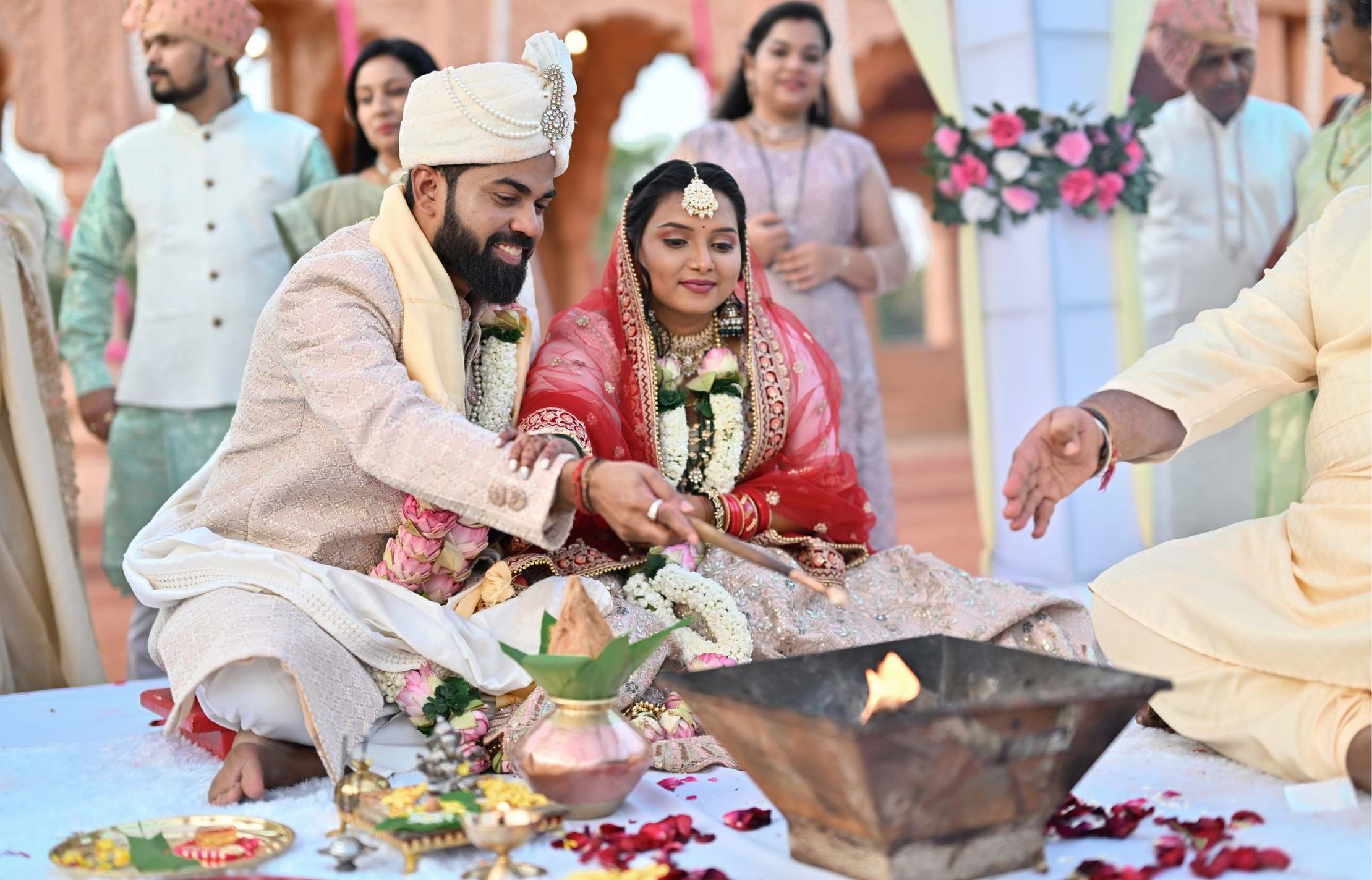
Flights to India for a Wedding: The Bottom Line
Booking flights to India for a wedding or family visit from the US and Canada is entirely manageable when you understand the demand calendar, book within the right window for your travel period, and use the right airline for your departure city. Nonstop on Air India, United, and Air Canada eliminates connection risk. European connections via Lufthansa or British Airways offer reliability and good baggage policies. West Coast travelers are well-served via Singapore or Tokyo.
The biggest mistake most travelers make is waiting too long, especially for peak-season wedding travel, where seats on preferred routes fill months in advance.
If you want access to unpublished fares on North American flights to India, ASAP Tickets’ agents specialize in this corridor and can often find prices that don’t appear online. Call us at 844-300-7983, and we’ll help you get there in time.
Frequently Asked Questions About Flights to India for a Wedding
What is the best airline to fly to India from the US for a wedding?
For fixed-date events like weddings, nonstop is the safest choice. Both Air India and United Airlines operate nonstop flights from the East Coast to Delhi and Mumbai. If nonstop isn’t available from your city, Lufthansa and British Airways offer the most reliable connecting options via Frankfurt and London, respectively, with strong schedule integrity and generous baggage policies for travelers carrying gifts and formal wear.
How far in advance should I book flights to India for a wedding?
For peak wedding season (October through January) and summer (June–July), book 4–6 months in advance. Seats on nonstop routes and preferred departure times fill earliest. For shoulder-season travel (March–May, September), 6–10 weeks’ advance notice is typically sufficient. The single biggest mistake wedding travelers make is waiting too long and losing access to nonstop options.
Is it safe to fly through Dubai or Doha for travel to India in 2026?
Gulf carriers are accepting bookings, but given ongoing post-ceasefire uncertainty following the 2026 conflict, travelers with fixed wedding dates should consider booking flexible or refundable fares if routing through Dubai, Doha, or Abu Dhabi. A disrupted Gulf connection on a non-refundable ticket could mean missing the ceremony entirely. European and Asian hubs carry no such risk.
What is the cheapest month to fly from the US to India?
September is historically the cheapest month on the US-India corridor, followed by March, April, and May. These are the windows between peak wedding season (October–January) and summer demand (June–July). If your family visit or smaller ceremony is flexible on dates, shoulder-season travel can save $200–$400 per ticket compared to peak pricing.
Can I fly nonstop from Canada to India for a wedding?
Yes. Air Canada operates nonstop service from Toronto Pearson (YYZ) to Delhi and Mumbai, making it the most direct option for Indian-Canadian travelers. Flight time is approximately 14–16 hours. For travelers in Calgary, Vancouver, or other Canadian cities without nonstop service, European connections via Lufthansa or British Airways are the most reliable one-stop options.
How many bags can I check on flights to India?
Air India offers the most generous allowance: 2 free checked bags (23kg each) on Classic and Flex economy fares, making it the best option for travelers carrying wedding gifts, sarees, sherwanis, or extra luggage. Note that Air India’s Value (lowest) economy fare only includes 1 free bag as of mid-2025, so confirm your fare type at booking.
United Airlines includes 1 free checked bag on standard Economy to India, but charges $90 for the first bag on Basic Economy, so avoid the Basic fare if you’re checking luggage.
Air Canada includes 1 free bag on Standard, Flex, and Comfort economy fares, and 2 bags on Latitude fares. Always factor in the full baggage cost when comparing fares before assuming a cheaper base fare is actually cheaper.

Get it right to your inbox by subscribing to ASAP Tickets weekly emails featuring the hottest flight deals from US to the .
Massive savings • Unsubscribe at any time.
You were sucessfully subscribed
Please check your inbox to confirm the subscription